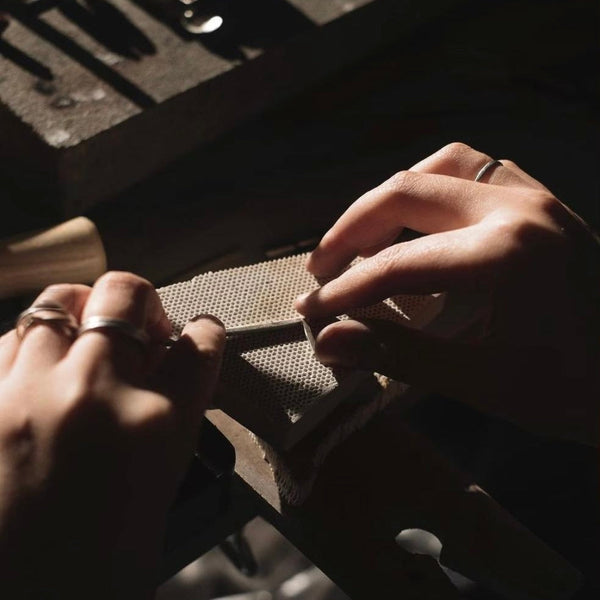



For everyday care, begin with a clean, soft, dry cloth. Check every material in the piece before adding water or a cleaning product. Keep bone and seed beads out of soaking water. When metal, stone, cord and leather share one object, choose a method that suits its most delicate component.
A little dullness after a day of wearing does not call for an aggressive clean. Care begins with noticing: a trace of lotion, a loose knot, a mark that was not there before. The aim is to preserve the object you chose, including the finish and texture that give it character.
Identify the Materials Before You Clean
A silver-colored surface does not tell you the metal's composition. The name “Tibetan silver” alone is not proof that a piece is sterling silver. Read the material description: sterling silver, brass and white copper need to be considered alongside any stones, coatings or deliberately darkened details.
The same principle applies to beads. Bone, bodhi seeds, glass and gemstones are different materials. A cleaner suitable for a plain metal component may be unsuitable for the rest of the necklace. Our Tibetan jewelry buying guide explains what to check in a product description before choosing a piece.
Everyday Care at a Glance
A starting routine; the maker's instructions for your particular piece take priority.
| Material | Start here | Avoid |
|---|---|---|
| Metal and mixed alloys | Wipe gently with a clean, dry cloth; confirm the metal and finish. | Abrasives, household cleaners and unverified metal dips. |
| Bone beads | Wipe smooth surfaces lightly; use a soft brush for loose dust in texture. | Soaking, bleach and sudden changes in heat or humidity. |
| Bodhi seeds and cord | Use gentle dry care and check the cord before wearing. | Immersion, hard scrubbing and pulling on knots. |
| Gemstones | Identify the stone, treatment and setting before wet cleaning. | A single cleaning method for every stone. |
Silver and Other Metals: Preserve the Finish
Start with a soft, non-abrasive cloth. Work lightly rather than polishing until every dark detail disappears. Darkened recesses may be an intentional part of a design, and cleaning compounds can affect adjacent materials.
A silver polishing cloth is a separate tool from a plain cloth: use one only when it is suitable for the confirmed metal and finish. Keep polishing compounds away from beads, cord and stones. Avoid toothpaste, bleach and household cleaning products. If you cannot identify the metal or surface treatment, ask for guidance before trying a dip or chemical cleaner.

Bone Jewelry: Dry Care and a Light Hand
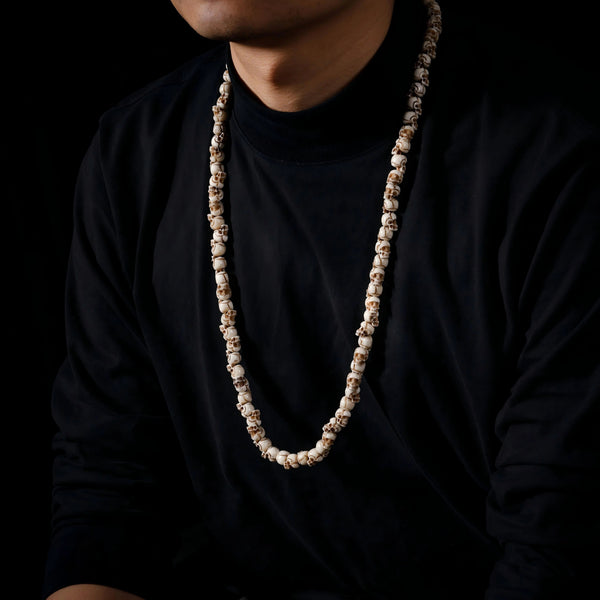
For smooth bone beads, lift surface residue with a soft, dry cloth. For loose dust in carving or texture, use a clean, soft brush without forcing the bristles into the surface. Do not soak bone or try to whiten it with bleach.
Keep pieces away from radiators, prolonged direct sunlight and rapid changes in temperature or humidity. If a surface is cracked, flaking or persistently dirty, stop cleaning and seek professional advice. The Canadian Conservation Institute's bone care guidance explains why porous or damaged bone needs particular caution around liquids.
On our 108 Yak Bone Mala Necklace, the cotton cord matters as much as the beads. Support the strand when handling it and check for fraying rather than pulling on it to test its strength.

Bodhi Seeds: Care for the Beads and the Cord
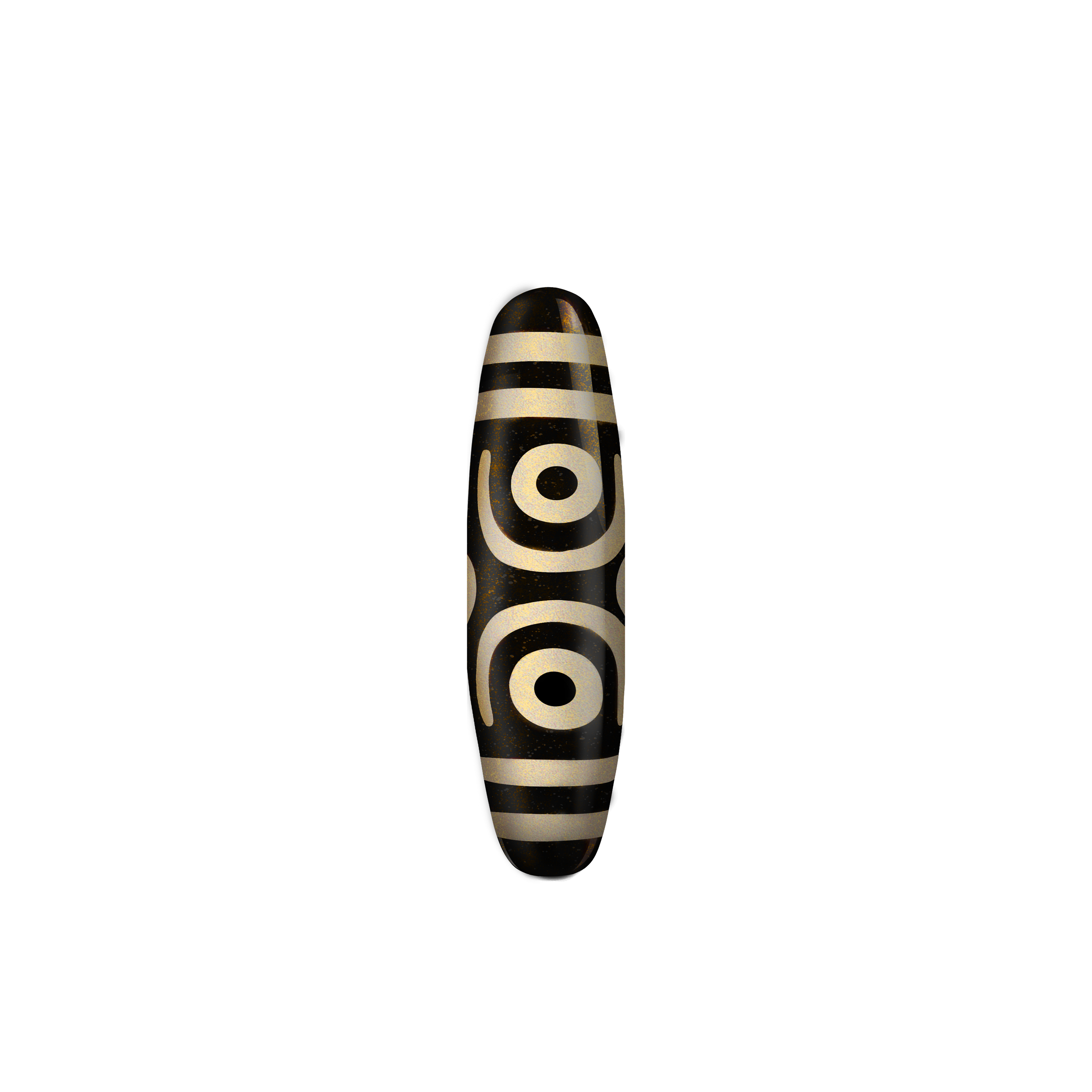
Seed beads deserve their own routine. Our Phoenix-Eye Bodhi 108 Mala Necklace combines bodhi seeds with hand-knotted cord. Begin with gentle dry care, avoid immersion, and inspect the knots and cord before wearing. This is a conservative everyday approach; follow any instructions supplied with your particular mala.
If a mixed strand includes stone, glass, metal or a pendant, check each component before using a cleaning product. Its most delicate part should guide how you handle the whole object.
Gemstones: Identify the Stone Before Adding Water
Stone identity, treatments and construction all affect cleaning choices. GIA recommends warm, soapy water for turquoise and lapis lazuli, while noting treatment-related cautions. Its turquoise guidance rules out steam and ultrasonic cleaning; its lapis guidance advises testing an inconspicuous area because some dyes are unstable.
That does not make soaking a complete necklace suitable: cord, adhesives, metal finishes or other beads may require a different approach. If the stone or its treatments are unknown, start with a soft, dry cloth and ask a qualified jeweler before going further. Keep perfume, household cleaners and cosmetics away from the surface.
For stone-specific guidance, see GIA's turquoise care guide and lapis lazuli care guide.
Storage Is Part of Care
Put jewelry on after skincare and fragrance have settled. Remove it before showering, swimming, cleaning or activities that expose it to impact and heavy perspiration. After wearing, inspect it briefly and store pieces separately to limit contact and tangling.
Choose a clean, sheltered place away from bathroom humidity and direct heat. For pale bone or absorbent surfaces, a clean, undyed soft wrap can separate the piece from colored storage materials. A pouch should hold a dry piece without compressing the beads or knotting the cord.

Common Care Questions
Can I use toothpaste on Tibetan silver?
Avoid it. Toothpaste is not a material-specific jewelry cleaner and its abrasives can affect a surface or finish. Confirm the metal and begin with a plain, soft cloth.
What if my bone mala gets wet?
Gently blot surface moisture with a clean, soft cloth and let the strand dry naturally away from direct heat. Avoid rubbing a fragile surface or putting a damp strand into storage. If cracking, color transfer or damage appears, stop wearing it and seek advice.
Should I polish away every dark area?
Check the design first. A dark recess or aged finish may be intentional. If you are unsure whether a change is surface dirt, patina or damage, ask before using an abrasive or chemical treatment.
Can I clean a mixed-material necklace in an ultrasonic cleaner?
Use one only when a qualified jeweler confirms that every component and its setting are suitable. GIA's general jewelry care guidance explains how treatments and construction can make ultrasonic cleaning unsuitable.
The Things We Choose to Keep
Care is a small, repeated act: looking closely, handling lightly, putting a piece away with attention. It lets you keep wearing what matters without trying to erase every sign of time. For the thought behind that practice, read The Keeper: What We Choose to Keep.