

A reflection on memory, material and the everyday acts of care that make an object worth keeping close.
At the end of the day, a necklace comes off. A cord is loosened. Beads pass through the hand before being placed beside a folded cloth. A pouch closes around something chosen that morning.
These are small actions. Repeated over months and years, they become part of the relationship between a person and an object.
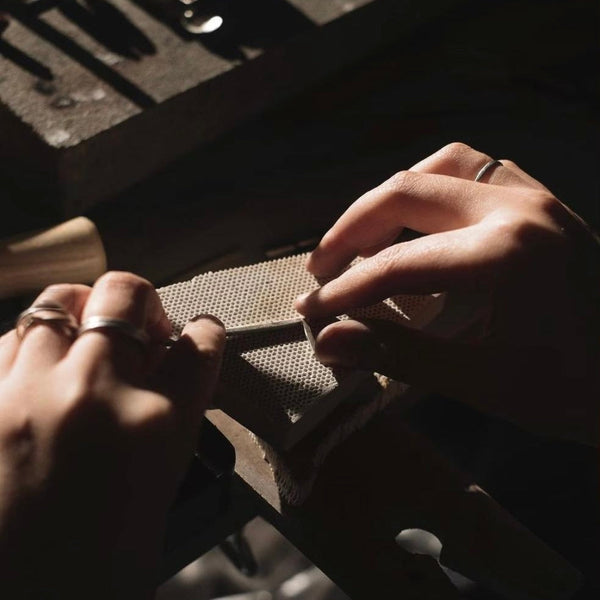
Attention continues after the first decision to buy. It appears in the way a necklace is put away, a surface is cleaned, or a worn cord is checked before the piece is carried again.
Within AURA DEER, The Keeper names this kind of attention: the impulse to preserve, care for and remain responsible for what has been chosen. A Keeper notices when a familiar object needs care. They remember where it belongs.
Choosing what stays
A few objects gradually find a place in a life. A necklace worn through ordinary working days. A piece received at a turning point. A pouch whose contents have been selected carefully.
The reasons for keeping them can be precise and private. A particular texture feels right in the hand. The scale works with the clothes worn most often. A symbol gives form to a promise that is difficult to put into words.
Such relationships develop through use. A piece becomes familiar against the collar of a shirt. Its fastening can be found by touch. Putting it on becomes a deliberate part of getting ready.
The Keeper pays attention to these details. Choosing what stays also means making room for it: in a routine, in a drawer, in the time set aside for care. An object earns its place through the relationship that follows.
Material gives memory a place
Material is where that relationship becomes tangible. The shape of a bead, the grain of leather and the construction of a cord give the hand something specific to know.
The 108 Yak Bone Mala Necklace brings together disc-shaped yak bone beads and cotton cord. Its beads measure approximately 14 × 11 mm, with weathered textures and earthy tones.
Those details give the piece a distinct visual rhythm. The repeated discs create a continuous line around the body or through the hand. The cord is part of its construction and deserves the same attention as the beads themselves.
In AURA DEER’s meaning system, plain yak bone and the 108 mala are associated with Endurance: patience, continued use and strength shaped over time. The Keeper approaches that meaning through the practical decision to look after an object and carry it again.
As a piece becomes familiar, small details become easier to notice. A surface feels different. A knot needs attention. The object remains present in daily life because someone continues to pay attention to it.

The value of a repeated gesture
The Phoenix-Eye Bodhi 108 Mala Necklace offers another material vocabulary. It is made with 108 phoenix-eye bodhi seeds, approximately 9–10 mm in size, on a hand-knotted cord.
Compared with the larger disc-shaped yak bone beads, these smaller seed beads give a different scale and form to the repeated strand. Choosing between them begins with material, proportion and how the piece will be worn or held.
For The Keeper, a repeated gesture can become part of ordinary attention: lifting the strand from its place, checking the cord, putting it away after wearing it. Familiarity grows through these encounters.
Within the brand’s interpretation, Bodhi belongs to the language of patience and gradual change. Its meaning leaves room for the wearer’s own experience. The everyday act is simple: return to something deliberately chosen and give it the attention it needs.

Giving an object a place
Keeping also has a physical side. An object needs somewhere to return to between uses.
The Oiled Cowhide Jewelry Pouch is made from vegetable-tanned, full-grain cowhide, approximately 3–4 mm thick. Its listed dimensions are 12 × 10 cm, and it includes a Nine-Palace charm.
The leather gives the pouch its material presence; the included charm provides its symbolic focus. Within AURA DEER, the Nine-Palace is associated with Protection through order, boundaries and steadiness.
For The Keeper, the act of placing something inside a container carries its own significance. It gives the object a defined location and makes returning to it easier. Storage becomes part of the care given to what is kept.
Choose a container according to the dimensions and materials of the pieces it will hold. Leave room for cords and strands, and follow the care guidance for each material. The jewelry pictured with this pouch is shown for display and is sold separately.

Care makes continuity possible
Long ownership involves observation. Before putting a piece away, take a moment to look at the cord, fastening and points where materials meet. Notice anything that has loosened or changed since it was last worn.
Choose cleaning methods for the actual materials in the piece. A method suitable for one metal may be unsuitable for bone, seed beads, leather or a particular stone. A mixed-material object deserves care that considers all of its parts.
Use the maker’s guidance, keep relevant product information and seek advice when a change is difficult to assess. A loose cord or damaged component needs attention before the piece is worn again.
This practical attention is part of The Keeper’s character. Responsibility appears in ordinary decisions: allowing time to put something away properly, checking a fastening, or arranging a repair when needed. These actions give a valued object a better chance of remaining part of daily life.
Keep a small record
Keep the useful details that accompany a piece: its material notes, the maker’s care instructions and the date it entered your life. These details make it easier to choose appropriate care when the original listing or packaging is no longer at hand.
A few personal words can sit beside those facts. Who chose it. Where it was first worn. Why it stayed. A small card or a private note gives those details somewhere to remain without asking the object to explain everything on its own.
If a cord is replaced or a repair is made, add that to the record. The work of maintaining the piece becomes part of its history. Most of this can fit on a single card, kept with the original product information.
A gift carried forward
A gift can begin this relationship. The choice of material, form and meaning gives the recipient something to discover in their own time.
A simple note can record why the piece was chosen. The date, the occasion or a few direct words may be enough. The wearer will bring further meaning through the days in which it is carried.
The Keeper makes room for that continuing story. Care preserves the object, while use allows the relationship to develop. Something once given can become something reached for regularly, then something kept through a change in circumstances.
Over time, these repeated choices become the substance of keeping: knowing the object, noticing what it needs and continuing to make a place for it.
Keeps what matters close.
Objects to keep close
- 108 Yak Bone Mala Necklace — disc-shaped yak bone beads, cotton cord and a substantial bead scale.
- Phoenix-Eye Bodhi 108 Mala Necklace — 108 seed beads on hand-knotted cord, with a smaller bead scale.
- Oiled Cowhide Jewelry Pouch — vegetable-tanned cowhide with an included Nine-Palace charm. Jewelry pictured is sold separately.
Further reading: How to Clean and Care for Tibetan Silver, Bone & Gemstone Jewelry.