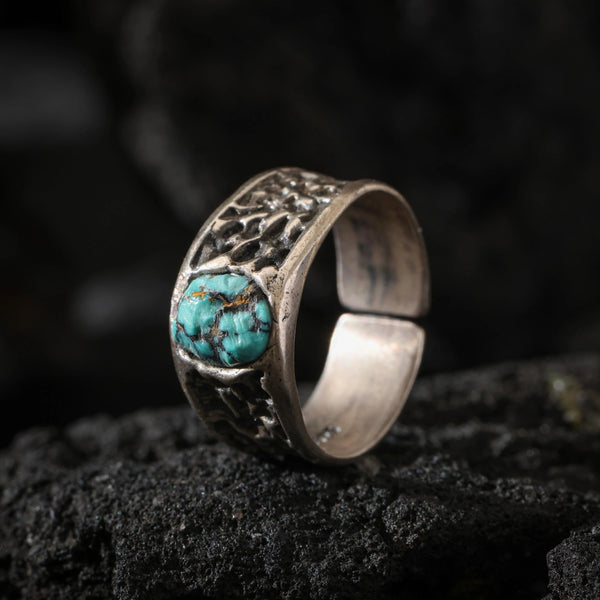


To layer a necklace, bracelet and ring, choose one lead piece, repeat a color or metal tone, and leave room for the pieces to move. Work across the neck, wrist and hand rather than deciding on every object at once. The result can be spare or substantial; the useful question is whether the details support the focus you chose.
Yak bone, turquoise and silver-colored surfaces offer one way to build that relationship. Warm bead tones can sit against cool metal tones, while a small blue-green detail links two different parts of the look. Try the combination with clothes you already wear—an open shirt, dark knit or leather jacket gives each piece a different background.
Choose the Piece That Leads
Begin with the object you most want to see. A pendant may lead at the center of the chest; a broad ring can make the hand the focus instead. Put that piece on first and add one supporting object. Notice its scale, color and distance from the first before adding another.
You do not need to fill all three zones. Keeping one wrist clear or wearing a single ring can give a detailed necklace more space. If the ring leads, a simpler bracelet can repeat its metal tone without putting another large detail directly beside it.
At the Neck: Start With the Actual Length
The silver-toned Crossed Vajra Pendant Necklace is listed with a 60 cm chain and a pendant height of 5.5 cm. Its materials are silver-plated copper with brass details, turquoise and red agate accents. Those blue-green and red details give you specific colors to repeat elsewhere.
Use the Necklace Size Guide to picture a chain length against your own neckline. If you add a second necklace, check where both pendants rest and whether their chains or raised details meet as you move. Leave enough separation for each form to remain clear.

At the Wrist: Compare the Bead Form and Fit
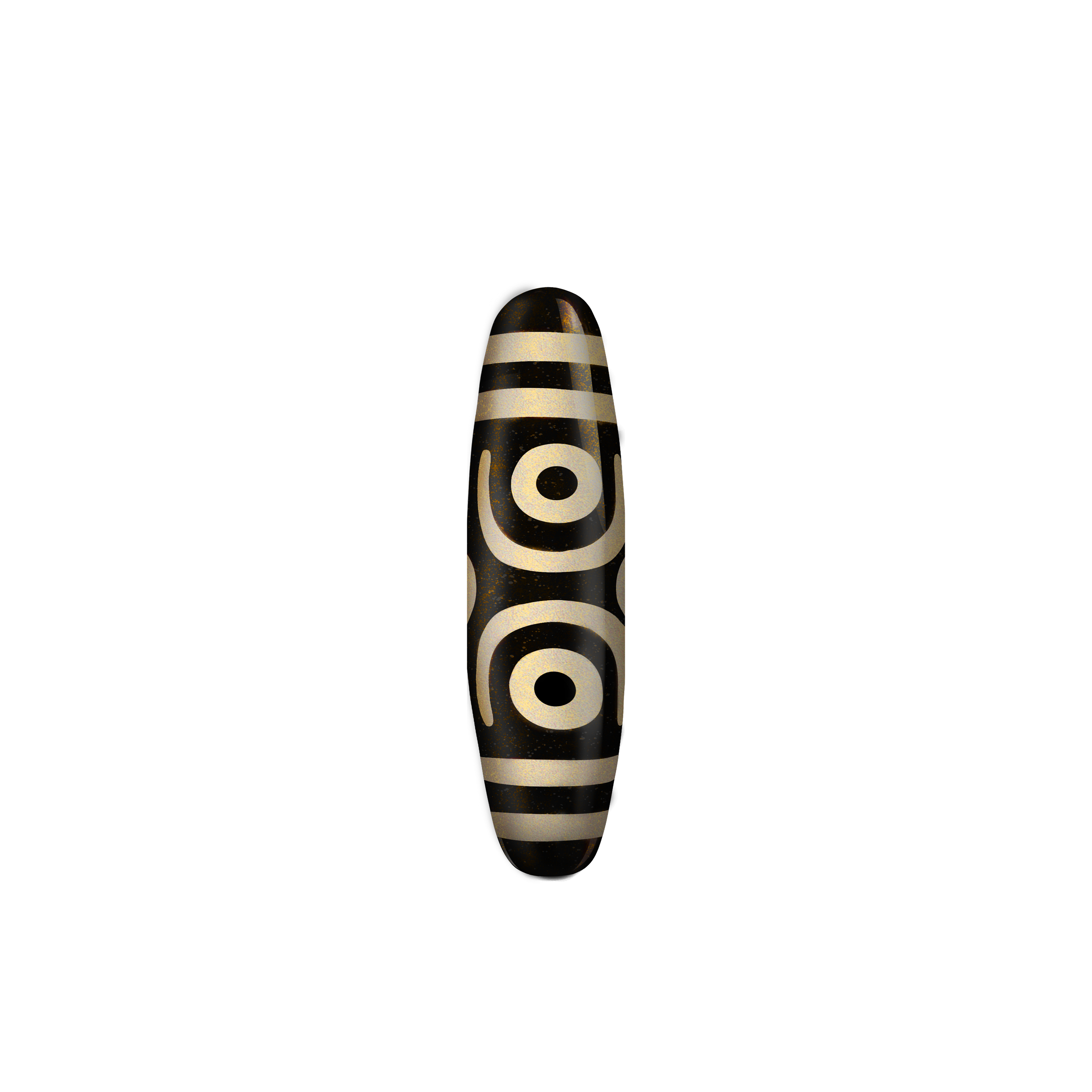
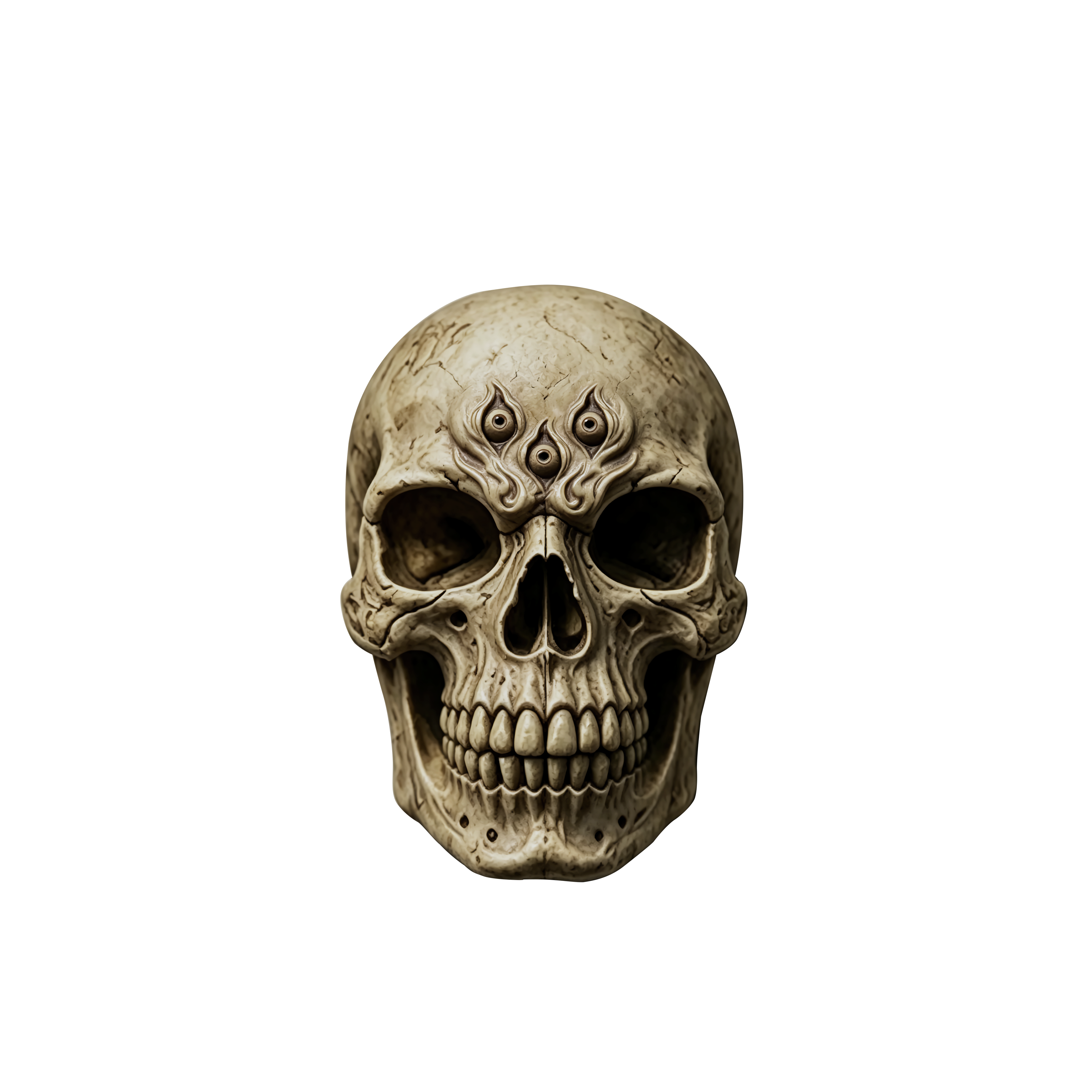
The Aged Yak Bone Skull Bracelet is listed with yak bone beads measuring 8 × 10 mm on elastic cord. Its repeated carved forms bring a different texture from a smooth metal band. The Bone Double-Sided Skull Bracelet uses a larger listed skull-bead size of 15 × 18 mm, with yak bone, a black agate spacer and elastic cord.
Compare these as different bead forms, rather than treating their measurements as wrist sizes. Measure your wrist with the Bracelet Size Guide and check the fit information for the chosen design. Begin with one bracelet, then see whether another adds a useful color or texture while leaving the wrist comfortable.

At the Hand: Give a Broad Face Its Own Space
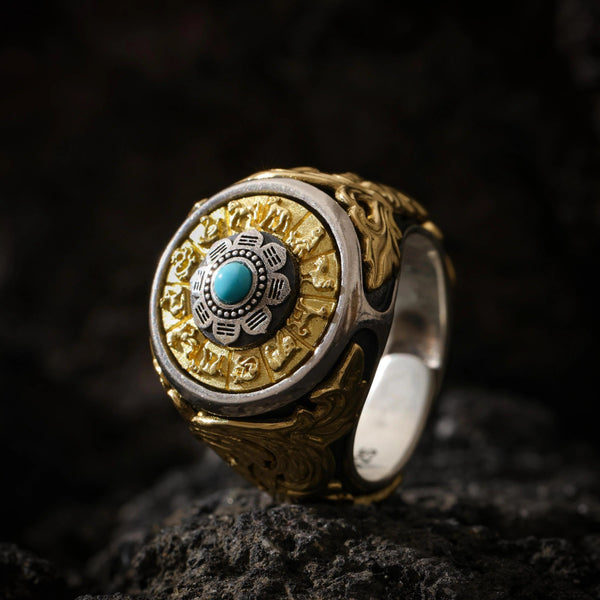
The Adjustable Eight Trigrams Turquoise Ring combines sterling silver, brass and turquoise. Its listed face dimensions are 26 mm W × 19 mm H, with an adjustable US 9–12 fit description. A small turquoise center can repeat the color in a pendant without requiring every piece to match.
Look at the spaces between rings as well as the rings themselves. Check that neighboring edges do not press against each other when your hand relaxes or closes. For the difference between a face dimension, band width and fit measurement, read How to Choose a Wide-Face Ring.

Repeat the Tone and Read the Material
Matching a visible color does not require identical materials. The silver-toned pendant above is silver-plated copper with brass details; the Eight Trigrams ring lists sterling silver, brass and turquoise. Keep that distinction when choosing and caring for the pieces. A silver-colored surface alone does not identify the metal beneath it.
Choose one thread to carry through the look: a blue-green accent, a warm metal tone or the repeated texture of beads. That is enough to connect objects across the body. Their symbols can hold personal meaning alongside the visible choices of proportion, color and form.
Leave Room for the Day
Before leaving, move your hands, let your sleeves fall and notice where a cuff, bracelet or ring meets another object. Take away a piece if the arrangement feels crowded or repeatedly catches. Store pieces separately when you take them off and use the material-specific care guide for mixed-metal and stone designs.
Build the combination gradually around the objects you choose to keep wearing. Attention to a clasp, bead or worn edge becomes part of that relationship. The Keeper considers the care and responsibility that continue after an object has been chosen.