

Table of Contents
- The Misunderstanding of the Ritual Blade
- What It Actually Means to Stabilize Unsettled Energy
- The Quiet Courage of Setting Boundaries Without Fighting
- Abhaya: Fearlessness That Lives in the Bones, Not the Fist
- This Is What It Means to Wear the Phurba
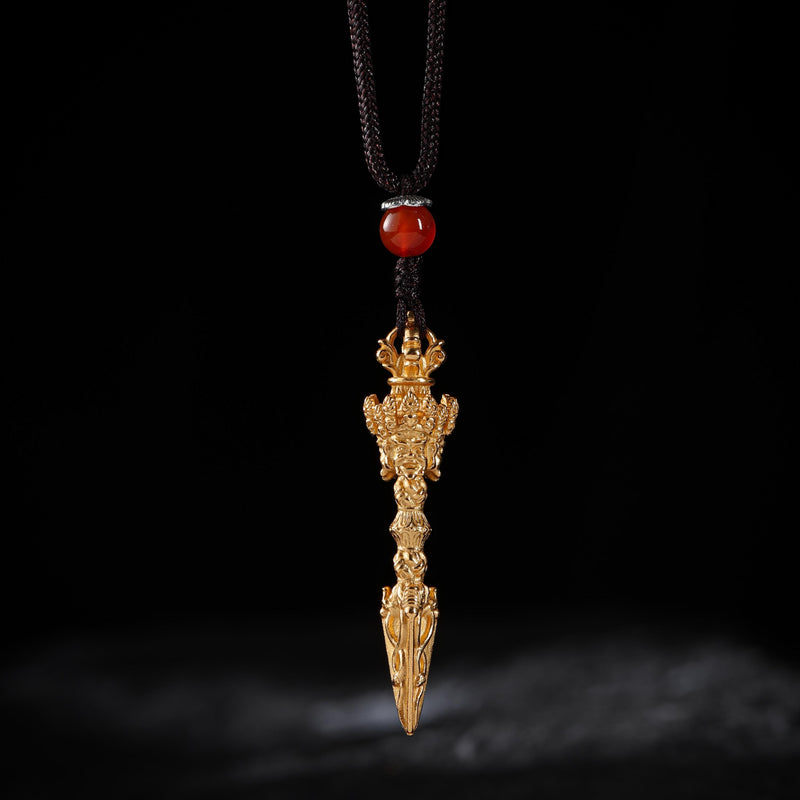
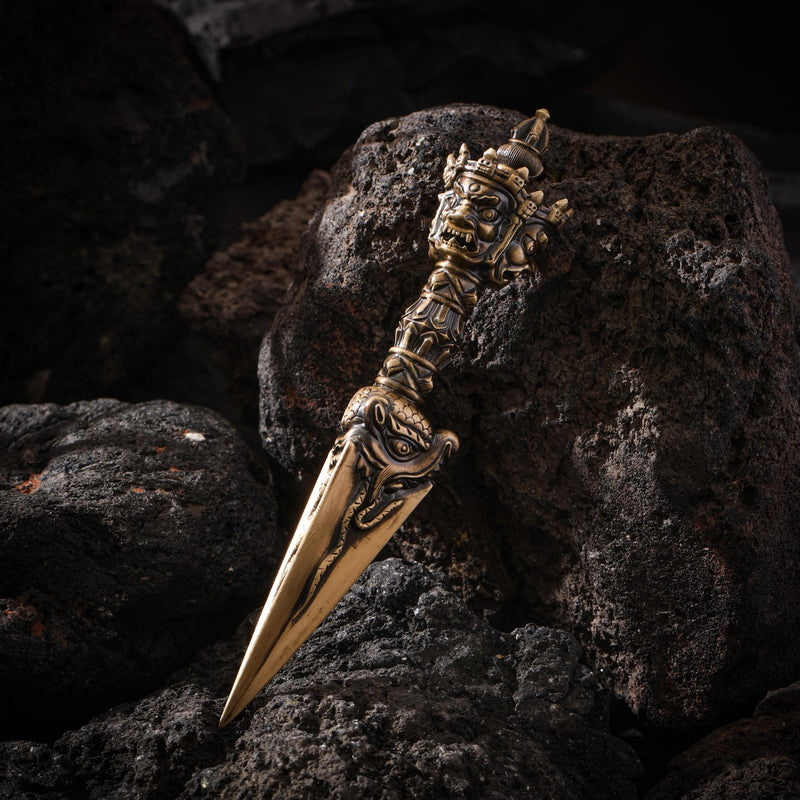
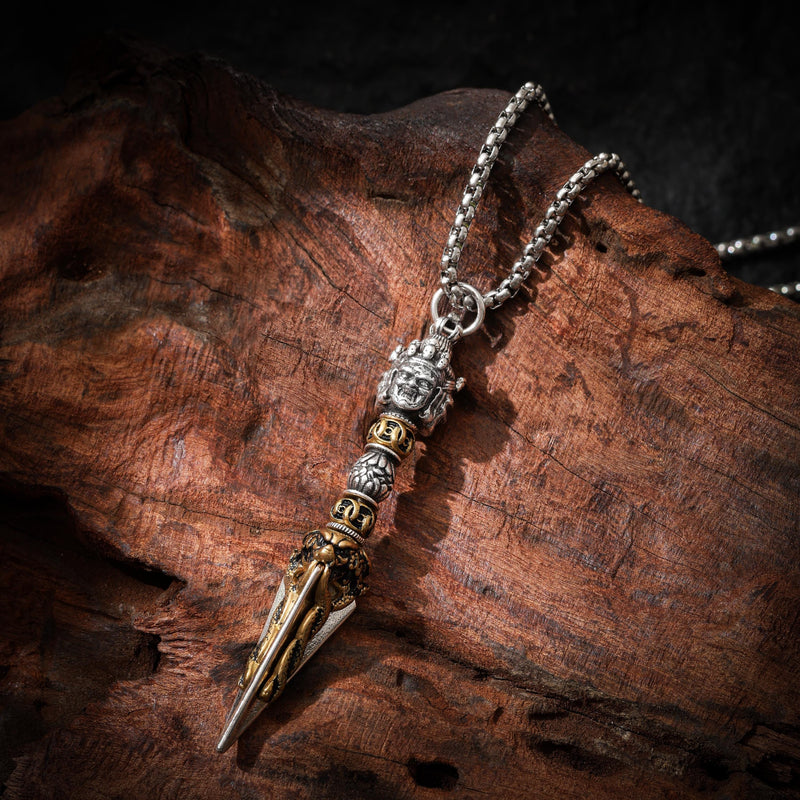
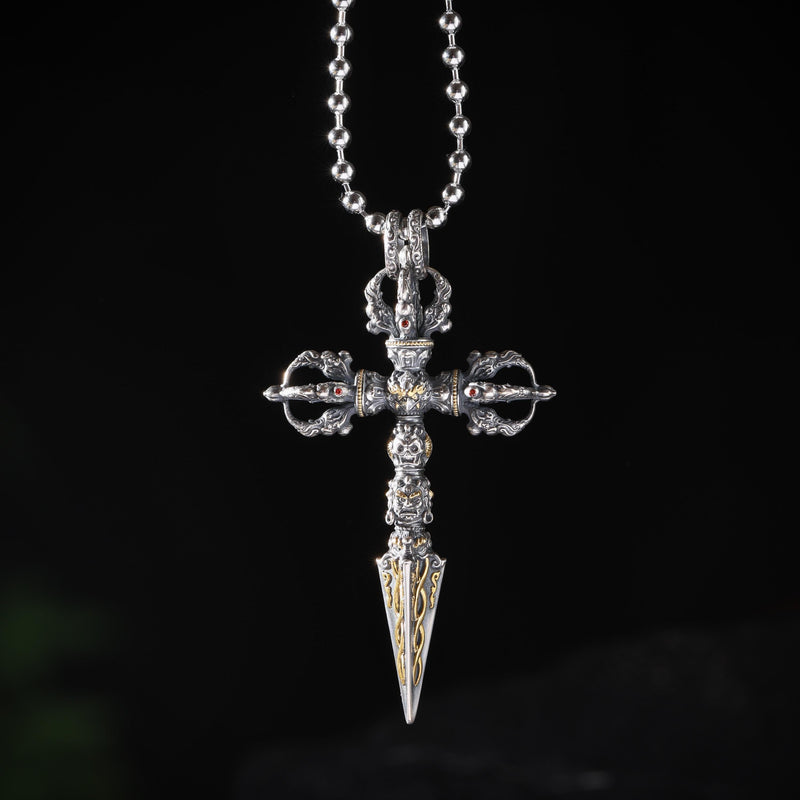
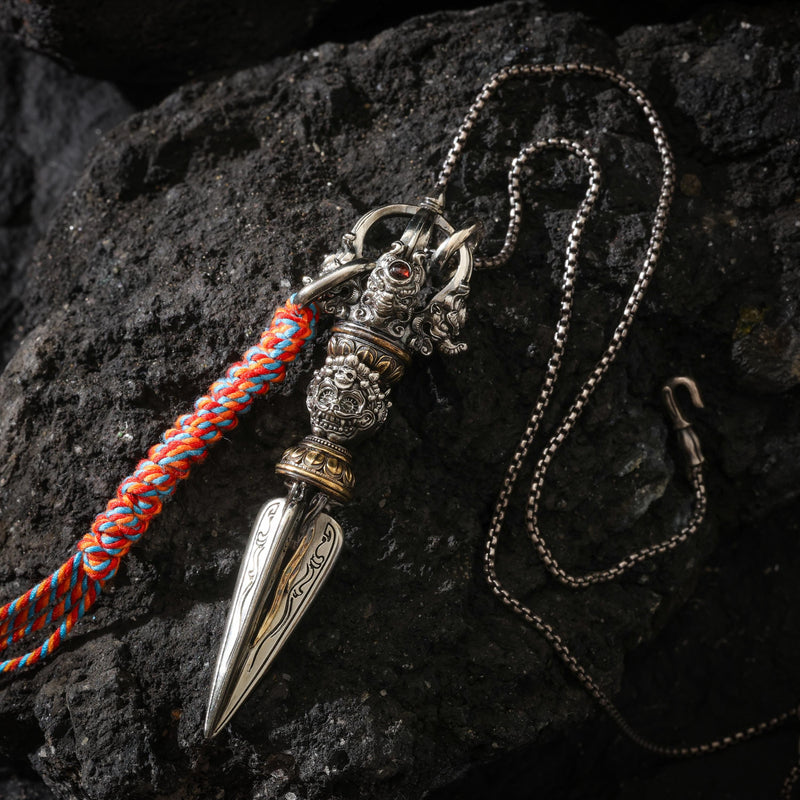
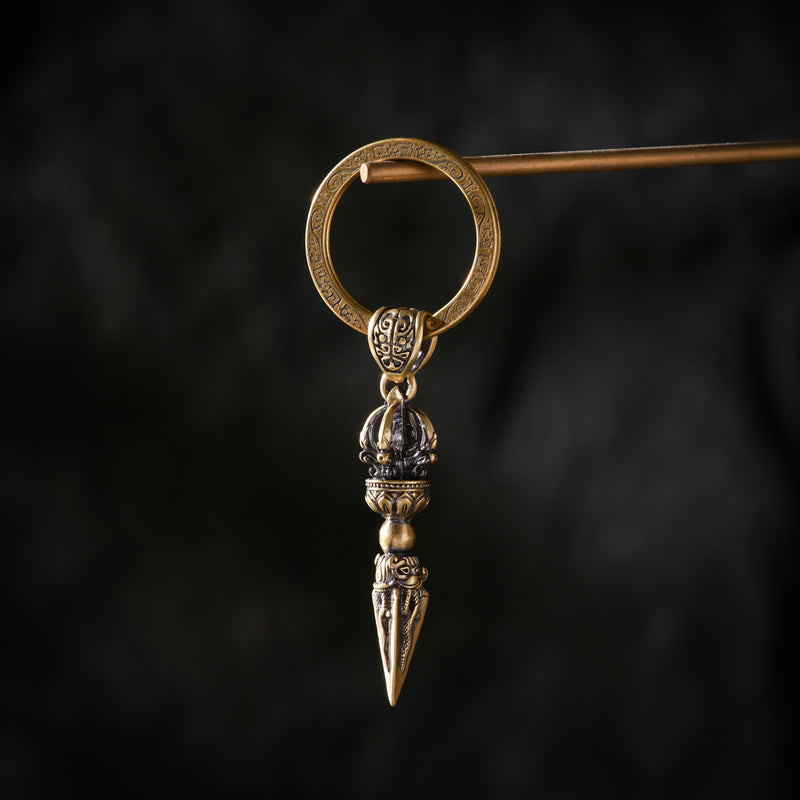
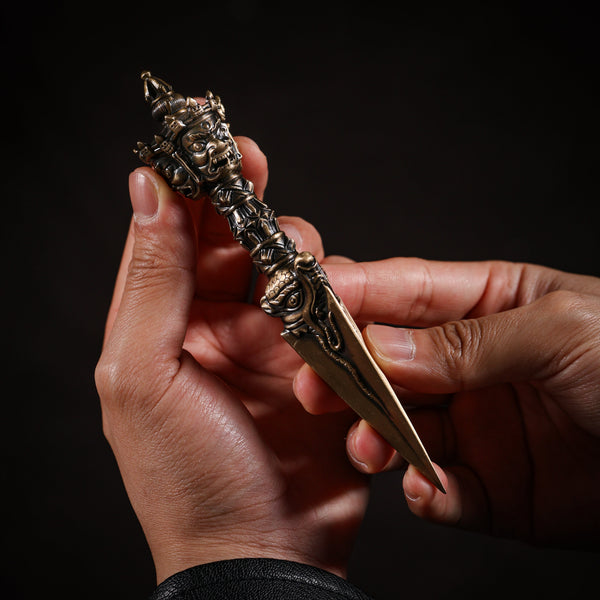
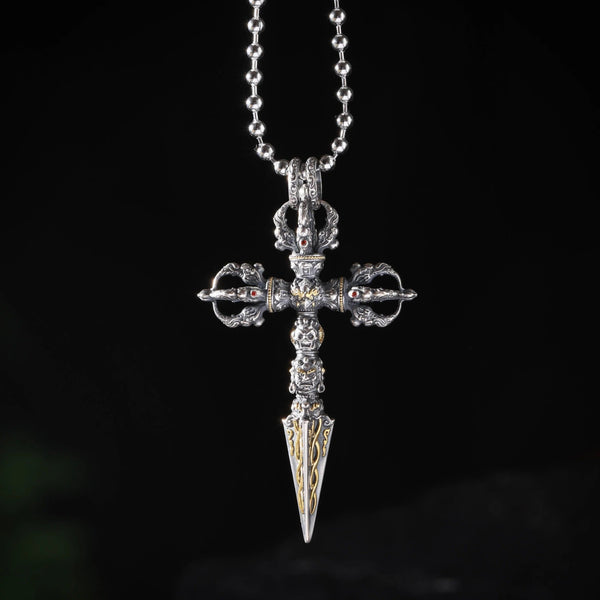
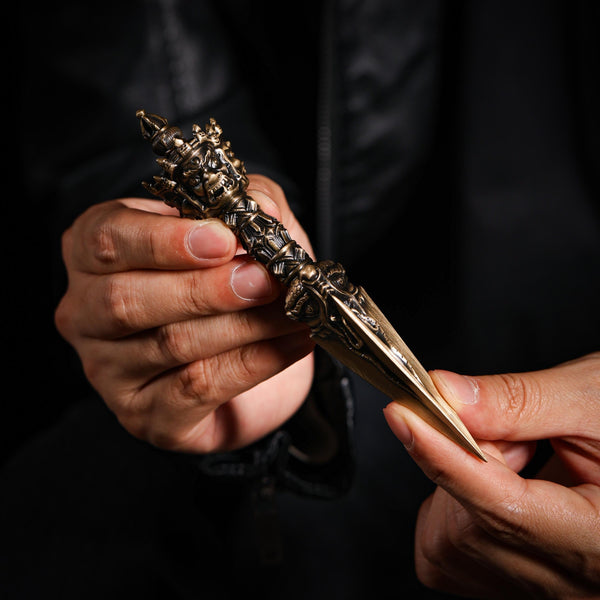
To look at a phurba is to see a blade. Sharp, angular, forged with the silhouette of a ritual dagger, it is easy to reduce its meaning to force, attack, and conquest — a weapon to cut down obstacles, defeat opposition, and win every fight.
This is the surface reading. And it misses the point entirely.
Across Himalayan ritual traditions, the phurba was never meant to be swung outward. It is driven downward. It does not chase enemies. It pierces the ground to anchor what is unsteady. Its true power is not in cutting what stands before you, but in stabilizing what churns within and around you. It is a stake driven into the earth of your own being, so that when the winds of uncertainty, criticism, and self-doubt blow hard, you do not break. You do not bend. You do not get swept away.
You simply stand.
In a world that rewards aggression, loudness, and constant winning, this is a radical kind of strength.

The Misunderstanding of the Ritual Blade
But ritual objects do not work like physical weapons.
In Tibetan practice, the phurba is most often used to ground ceremony, to settle turbulent energy, and to hold space steady amid chaos. Its three blades do not target three enemies. They pierce through three layers of internal unrest: delusion that clouds judgment, restlessness that pulls you off center, and fear that makes you shrink from your own path. The blade does not extend outward to harm others. It points inward to steady you.
This is the distinction most people miss:
- The sword clears a path forward.
- The phurba holds the ground beneath you.
We live in a culture obsessed with forward motion. We are told to hustle, to fight, to climb, to never stop pushing. What we are rarely told is how to stay — how to hold our position when everyone around us is pulling us sideways, how to trust our own judgment when every voice online says something different, how to remain intact when the world feels designed to erode us.
That is the work of the phurba. It does not help you win the fight. It helps you stop fighting the wrong battles entirely, and plant yourself where you belong.

What It Actually Means to Stabilize Unsettled Energy
Stabilize unsettled energy. It is a phrase that sounds abstract, until you recognize the feeling in your own body.
It is the tightness in your chest after a difficult conversation, replaying every word on loop, wondering if you said too much or too little.
It is the quiet panic before a big decision, scrolling through endless opinions, terrified of choosing wrong.
It is the way you shrink yourself in rooms where you do not feel welcome, adjusting your words, your boundaries, your values to keep the peace.
This is unsettled energy. It is not an external enemy you can fight off. It is internal turbulence — and it cannot be defeated with force. It can only be anchored.
Think of a tent in a storm. You do not fight the wind. You drive the stakes deeper into the ground. The harder the wind blows, the more you rely on the weight of what holds you steady.
The phurba is that stake, scaled down to the size of a life.
In traditional context, it is used to consecrate space — to mark a point of stillness inside chaos. Translated to modern life, it does the same for your inner world. When everything feels unmoored — when your confidence wavers, when your boundaries are tested, when your mind spins with what-ifs — the phurba is the symbolic point you return to. I am here. This is my ground. I do not have to chase, prove, or perform to deserve to stand here.
It does not make the storm stop. It makes you unshakable inside it.

The Quiet Courage of Setting Boundaries Without Fighting
This is the myth the phurba dismantles: strong boundaries do not require fighting. They require rootedness.
A boundary held from a place of unshakable calm does not need to yell. It does not need to justify itself. It does not need to convince anyone of its right to exist. It simply is. A tree does not argue with the wind for blowing against it. It just stands.
This is the energy the phurba carries. To wear it is to carry that reminder: you do not owe anyone a debate about your limits. You do not have to win an argument to deserve respect. You do not need to prove your worth to claim your space.
You just have to decide to stay there.
For people-pleasers, for those who grew up prioritizing harmony over themselves, for anyone who has ever apologized for taking up space — this is a quiet revolution. Strength is not how loud you can push back. It is how steadily you can refuse to be moved.
The phurba does not give you permission to be unkind. It gives you permission to be unshakable.

Abhaya: Fearlessness That Lives in the Bones, Not the Fist
Most people imagine fearlessness as bravado. No fear. No hesitation. No trembling hands or racing heart. A kind of unbreakable toughness that stares down every challenge without flinching.
That is not fearlessness. That is numbness.
True abhaya does not erase fear. It does not pretend uncertainty does not exist. It is the choice to stand your ground even when you are afraid. It is the quiet resolve that lives deeper than your nerves — in your bones, in your values, in the part of you that knows what is right for you, even when the whole world disagrees.
The phurba embodies this. Its sharp edges do not represent anger. They represent precision: knowing exactly where you stand, and not wavering from it. The guardian faces carved into its hilt do not snarl in rage. They hold a gaze of unshakable resolve — protective, watchful, unmoveable.
This is the kind of fearlessness most of us actually need. Not the courage to charge into battle. The courage to stay. To say no. To trust ourselves. To keep going even when the path feels shaky under our feet.
This Is What It Means to Wear the Phurba
Wearing a phurba is a promise you make to yourself:
- I will not shrink to make others comfortable.
- I will not abandon my truth to keep the peace.
- I will not let uncertainty unroot me.
- I will stand my ground, softly but unshakably.