

A line that waits
Before the dragon became a festival image, it was a line: angular, coiled, cut into bronze and jade by makers who left no explanation. What they left was form. A body folded back on itself. A head turned to watch. Strength that has not yet moved.

At AURA DEER, the dragon belongs to ABHAYA, the mark of fearlessness carried close. We call it the Silent Guardian. This letter traces where its form comes from, why it sits beside Garuda and Scorpion rather than among symbols of fortune, and what it asks of the person who carries it.
Origin: archaic forms, not a festival image
The dragon most people picture today, long and whiskered among clouds, is a later image. The forms behind our pieces are older and stricter.
Coiled jades
Neolithic jades from northeast China include coiled, C-shaped creatures that many scholars read as early dragon forms. Their makers left no texts, and what these figures meant to them is still debated. What remains certain is the gesture: a body closed into a curve, holding its own tension.
The Kui on bronze
On ritual bronze vessels of the Shang and Zhou periods, a recurring creature shown in profile, with an angular body and a single visible leg, is commonly called the kui dragon. It runs in bands along rims, feet and handles, often set against leiwen, the squared spiral known as the thunder pattern. The kui is less an animal than a rhythm: repeated, contained, exact.
The Chi in jade
Later jade carvers favored the chi, usually described as a hornless dragon. It climbs and curls across belt hooks, pendants and vessel handles, its body bending to fit the object rather than escaping it.
These are the sources we draw from: the kui's geometry, the chi's turning line, the key-fret and the cloud scroll. They come from early Chinese bronze and jade ornament. The dragon is not a Tibetan symbol, and we do not present it as one.
Strength that waits is strength under command.
Symbol meaning: strength held in coil
Within AURA DEER, the dragon is not a promise of dominance or good fortune. It represents strength that watches before it moves: vigilance, self-command, and the decision to guard what matters with force that stays under control. Each element of the form carries part of that reading.
| Element | Form | Reading within AURA DEER |
|---|---|---|
| The coil | A body folded back on itself | Force held in reserve. Strength that does not need to be spent to be present. |
| The turned head | Head raised and turned in profile | Watchfulness. Attention kept on the boundary before anything crosses it. |
| Scales | Overlapping plates along the body | Layered defense. Armor built from many small, repeated parts rather than one display. |
| Key-fret | The squared spiral of early bronze | Order and discipline. Wildness held within a structure. |
| Cloud scroll | Soft curls along the line | Movement kept in check. The capacity to move, chosen rather than spent. |
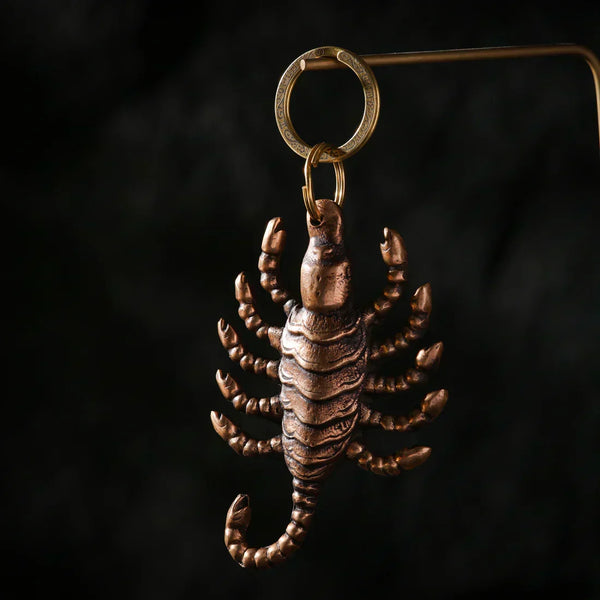
This is why the dragon sits under ABHAYA with Garuda, Mahakala, Phurba and Scorpion. Each is a different language of boundary. The dragon's is the quietest: it guards by being ready, not by striking.

Carried close: the dragon pieces
Each piece places the dragon where it is meant to be used, not displayed.
Kui Dragon Cuban Chain Necklace

Kui Dragon Faceted Rolo and Dragon Cuban Chains

Dragon Scale Adjustable Ring

Dragon Talisman Pouch

What wearing it means
The dragon does not do anything for the person who carries it. It is a reminder, chosen and kept close.
| Intention | What it asks | Suited to |
|---|---|---|
| Restraint | To hold force in reserve and spend it only with purpose. | Those whose strength is real but rarely shown; those learning when not to act. |
| Vigilance | To stay watchful under pressure without becoming reactive. | Those carrying responsibility for others; those in demanding, high-exposure work. |
| Self-command | To keep wildness within discipline. | Those building a practice, a craft or a life through long repetition. |
Worn as a reminder to keep strength in reserve, remain watchful under pressure, and act only with clear purpose.
How it ages
Brass darkens. Silver oxidizes in the recesses of the carving. Leather softens and takes the shape of what it holds. These changes are not wear to be polished away; they are how the piece becomes yours. For daily care, wipe metal with a soft, dry cloth and keep pieces away from water and perfume. Read our care guide →
Further reading
Jessica Rawson, Chinese Bronzes: Art and Ritual (British Museum Publications, 1987).
Jessica Rawson, Chinese Jade: From the Neolithic to the Qing (British Museum Press, 1995).
View the Dragon pieces — Free Worldwide Shipping · Duties Prepaid · 30-Day Returns →