


Table of Contents
- The Myth of Fast Strength
- What 108 Repetitions Actually Build
- Slow Strength for Every Kind of Long Game
- The Mala as a Physical Record of Your Quiet Progress
- How to Start Small, One Bead at a Time
We live in a world that worships speed. Seven-day transformations. Thirty-day overhauls. Overnight success stories that go viral. We are taught that strength looks like a single, dramatic breakthrough — one big idea, one perfect move, one moment that changes everything.
Slow, steady repetition, by contrast, feels like nothing. It feels boring. Unremarkable. Like you are not making progress at all.
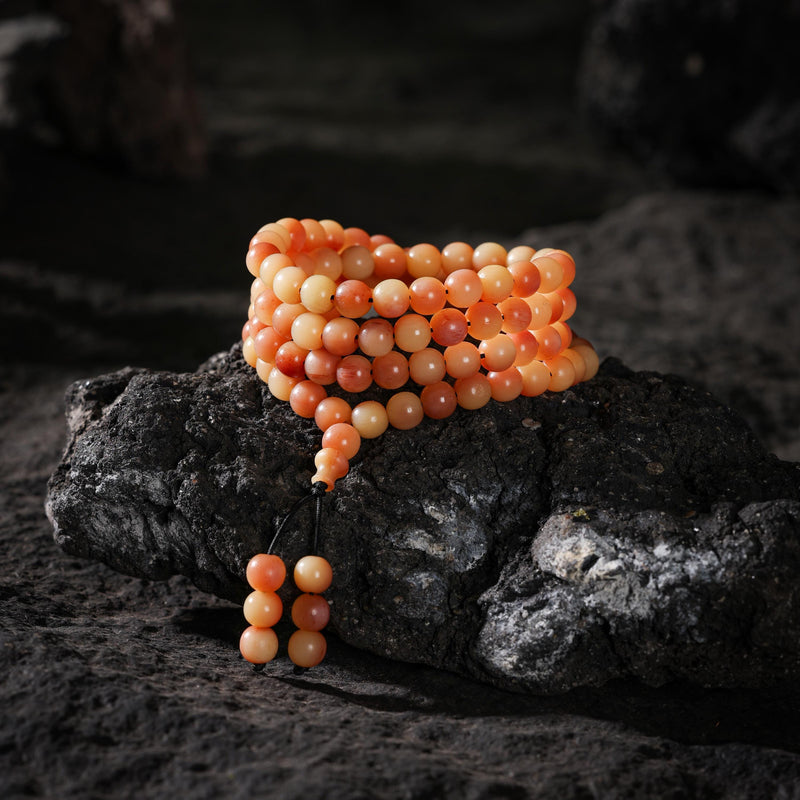
The 108 mala exists to remind us of a quieter truth: the strongest things in life are not built in bursts. They are built in repetition. Rooted in the spirit of fortitude and practice, this string of beads is far more than a devotional tool. It is a physical metaphor for how real inner strength grows — not in leaps, but one small, intentional act at a time, accumulated over days, months, and years.

The Myth of Fast Strength
We have been sold a distorted image of growth. Social media feeds us highlight reels: the launch that goes viral, the exam score that defies odds, the personal glow-up that happens in a month. It makes us believe that progress should be visible, fast, and dramatic. If we are not “leveling up” every few weeks, we feel like we are falling behind.
This is the myth of fast strength. And it leaves most of us feeling inadequate, because most of life does not work that way.
The entrepreneur does not build a business on one big pitch. They build it in thousands of unglamorous, repeated acts: answering emails, refining details, showing up even when momentum feels absent. The student does not master a subject in one all-night cram session. They master it in daily, incremental rounds of review and practice. The person with steady, calm energy does not achieve it from one moment of enlightenment. They build it every time they pause instead of snapping back, every time they return their attention to the present, every time they choose patience over frustration.
We rarely see these moments. They are not impressive. They do not make for good stories. But they are where strength actually lives.

What 108 Repetitions Actually Build
There is a common misconception that the power of the 108 mala lives in the number itself — that 108 holds some mystical, inherent magic. And while the number carries deep symbolic meaning across traditions, its true value is much simpler: it gives you a structure for repetition.
Each bead is one small act of return. You move one bead through your fingers, you bring your mind back to your intention, you take one breath. Then you do it again. And again. 108 times.
It is not a counting exercise. It is a training exercise.
Think of it like training a muscle. You do not grow stronger by lifting one impossibly heavy weight once. You grow stronger by lifting a manageable weight, again and again, until the work builds new tissue. The mind works the same way. You do not build fortitude by having one grand moment of courage. You build it by repeatedly choosing to steady yourself, to return to focus, to stay with what is hard instead of running from it.
This is the quiet magic of compounding effort. A single bead, a single breath, one moment of presence — none of it feels like much on its own. But repeated 108 times a day, over weeks and months, it reshapes you. It builds a kind of inner stability that cannot be shaken by small disruptions, a kind of patience that does not crumble when results do not come fast.
Slow strength is not flashy. But it is unbreakable.

Slow Strength for Every Kind of Long Game
You do not need to be a practitioner of any tradition to benefit from this logic. The rhythm of the mala translates directly to every kind of long game people play in modern life.
If you are building something — a business, a career, a creative practice — the mala is a reminder that the boring, repeated work is the real work. It is easy to feel discouraged on days when there is no new milestone, no external validation. The beads in your hand tell you: progress does not have to be visible to be real. Keep showing up. The accumulation will show in time.
If you are learning or studying something new, it grounds you through the frustration of slow progress. Mastery feels tedious when you are in the middle of it. It feels like you are not getting better, because you are repeating the same small actions every day. The mala mirrors that truth: every repetition is not a waste. Every repetition is carving the skill deeper into you.
If you are rebuilding yourself — after loss, after burnout, after a season that broke you — it honors the pace of healing. You do not bounce back in one day. You come back slowly, one small choice at a time. One good meal. One quiet walk. One deep breath when you feel like unraveling. The mala does not rush you. It just walks with you, one bead at a time.
This is what fortitude really means. It is not the ability to win fast. It is the ability to stay steady, even when the timeline is longer than you wanted, even when no one is watching.

The Mala as a Physical Record of Your Quiet Progress
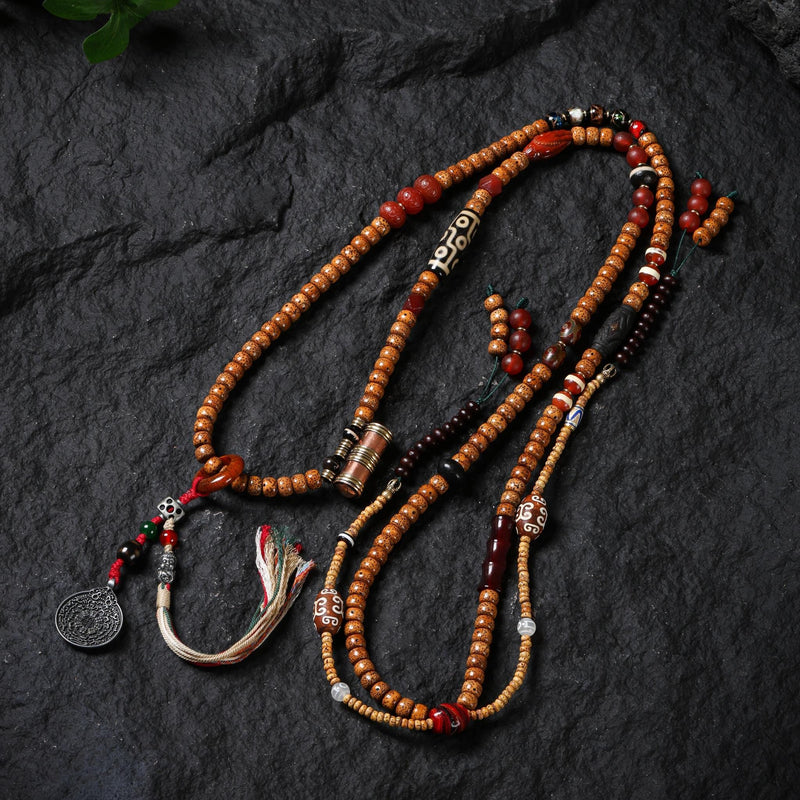
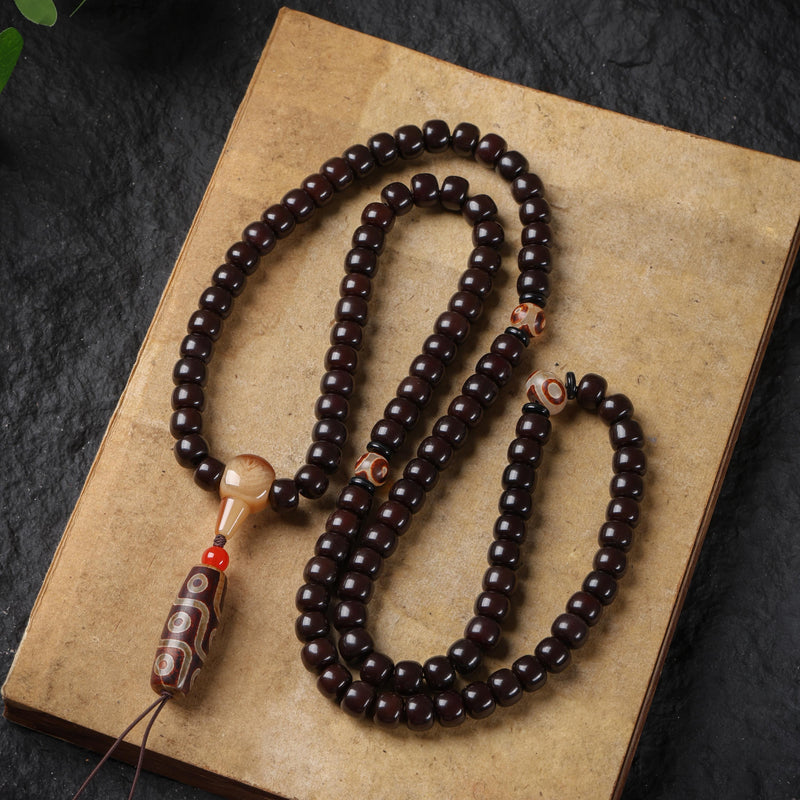
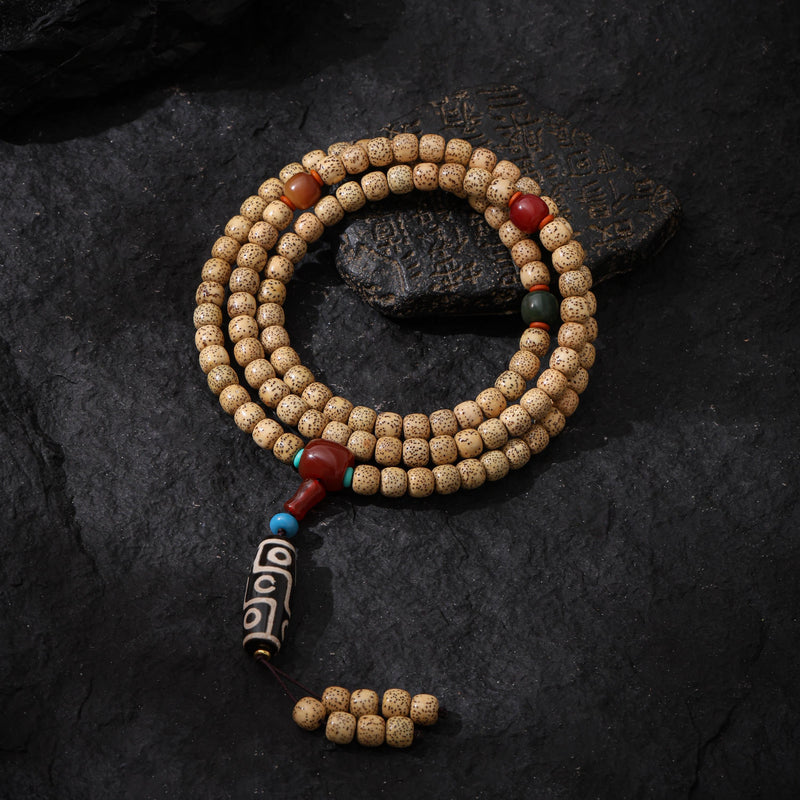
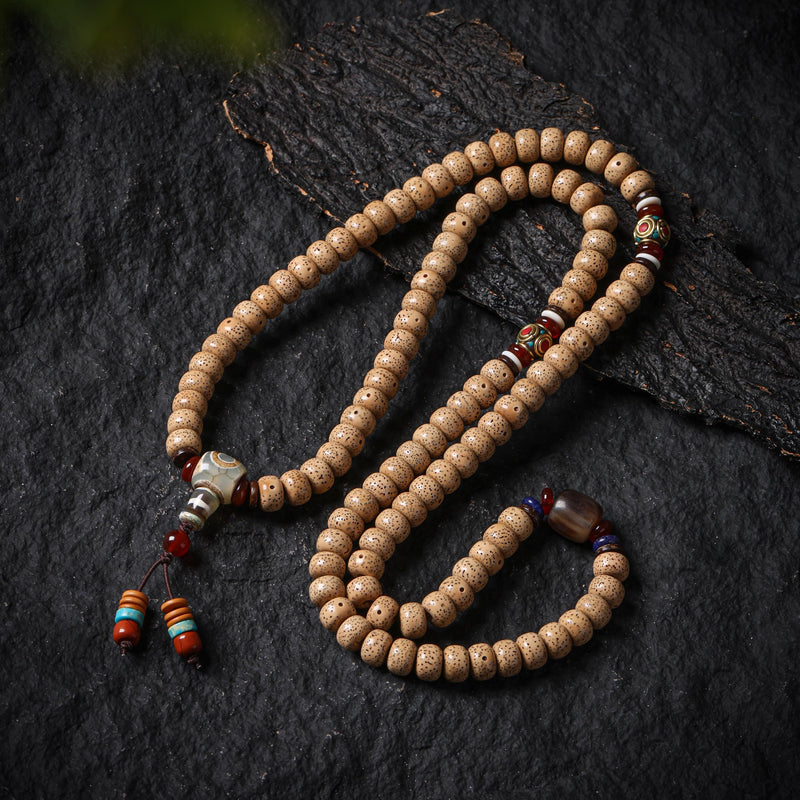
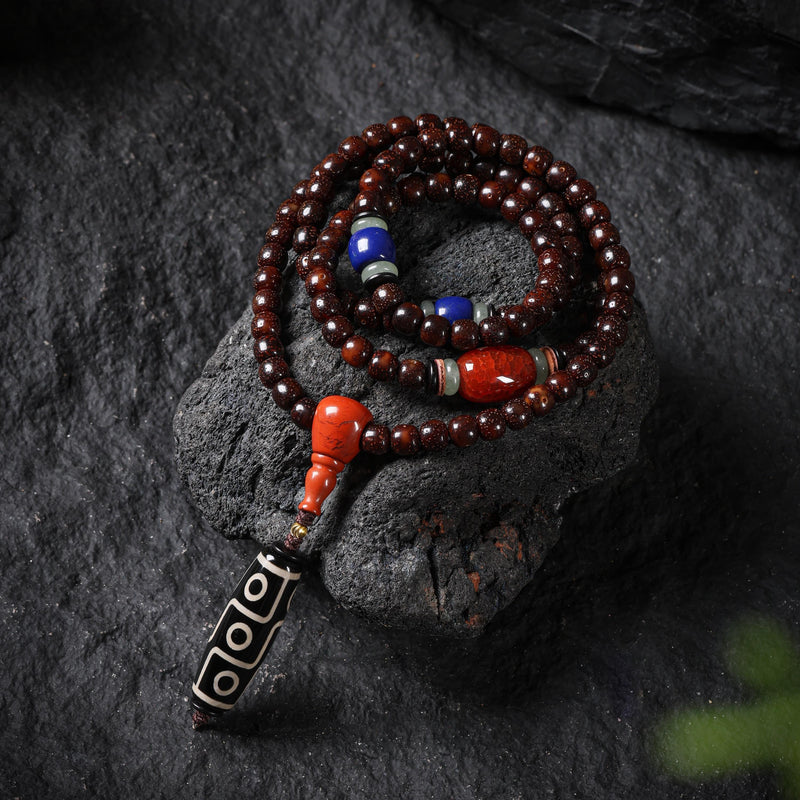
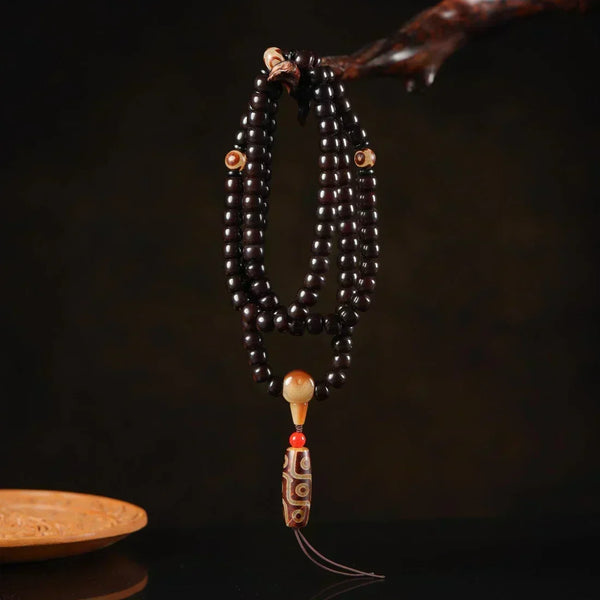
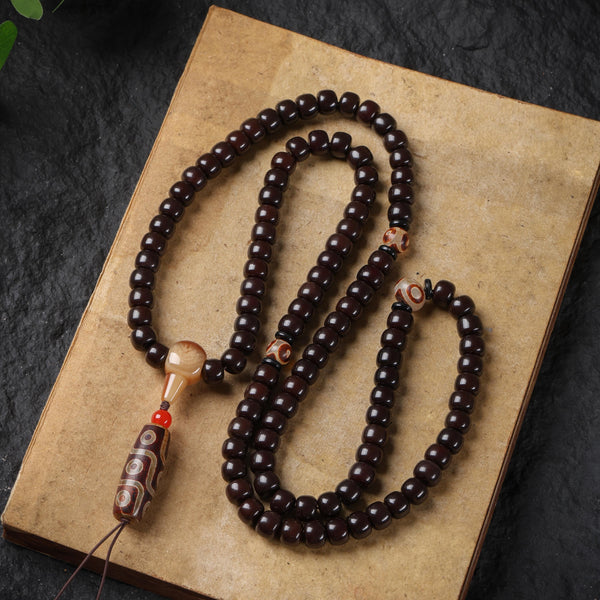
One of the most meaningful things about a bodhi seed mala is that it changes with you.
When it is new, the beads are matte, dry, uniform in tone. But with daily handling, with the oil from your skin, with the hours of wear and quiet practice, they develop a patina. They warm in tone. They take on a soft, subtle sheen. No two malas ever age the same way, because no two people’s days are the same. The marks on the beads are the marks of your hands, your routines, your breath.
In a world that is full of disposable, interchangeable objects, this is a rare thing: an item that carries the evidence of your life with it.
You will forget most of the small moments you spend with your mala. You will forget the quiet mornings, the stressful afternoons, the late nights you turned the beads between your fingers to calm down. But the beads will remember. They will hold the trace of all those small, uncelebrated acts of courage. They are a physical record that you showed up, even when it was hard.
That is what makes it more than jewelry, more than a tool. It is a tangible mirror of your own growth.
How to Start Small, One Bead at a Time
You do not need any prior experience to begin. You do not need to know mantras, or follow any ritual, or sit in any special position. The power is in the repetition, not the performance.
If you are new to working with a mala, start smaller than 108. Start with ten beads each morning. Hold them in your hand, move one bead at a time, and take one slow breath with each. That is your practice. That is enough.
On busy days, use three beads when you feel overwhelmed. Move them slowly, and let the tactile sensation of the seeds against your fingers pull you out of racing thoughts and back to the present. That is not “doing it wrong.” That is exactly what it is for.
The point is never to complete a perfect 108. The point is to keep returning. To build the habit of coming back to yourself, one small, intentional movement at a time.
The 108 mala is not a lucky charm that will speed up your journey. It will not skip the hard parts, or make the repetition feel exciting. What it will do is give you a tangible rhythm to hold onto. A physical reminder that every bead, every breath, every quiet act of showing up, is building something strong inside you.
Slow strength does not make headlines. It does not go viral. But it lasts. And it is the kind of strength that carries you through every season of life.
One bead at a time. One day at a time. That is where the power lives.
Explore the full 108 Mala collection