

What's inside
- What turquoise means
- Earrings — turquoise by the face
- Necklace — turquoise at the throat and heart
- Bracelet — turquoise on the hand
- A quick comparison
- Wearing and caring for turquoise
What turquoise means
Few stones are loved by so many cultures at once. Turquoise has been worn for thousands of years across Tibet, Persia and Central Asia, the American Southwest, and ancient Egypt — almost everywhere people have made jewelry, they have prized it.
Its color is the heart of it: a blue-green that looks like sky and water made solid. Across traditions it's been seen as a bridge between earth and sky — the everyday and the vast, brought together in one stone. And its meanings are remarkably consistent wherever it's found: protection, especially on journeys; good fortune; calm; healing; and clear, honest communication. It was the traveler's stone, worn on long roads and even on the horses that carried people across hard country, and it was the protector's stone, kept close to guard against harm.
In Tibet it's one of the most prized stones of all, worn by nearly everyone and believed to guard health and absorb what's harmful. There's an old tradition that turquoise shifts gently in color along with the person who wears it — a sign of how closely it was felt to be tied to its owner.
So turquoise is, at its core, a calm and protective stone — and, just as importantly, the one bit of real color that lifts everything around it.

Earrings — turquoise by the face
Worn at the ears, turquoise sits up by your face, near how you look, speak, and listen.
That placement leans into turquoise's link with clear communication and calm, clear thinking. Up by the head, it works like a settling, protective frame around your mind and your voice. It's also the most expressive place to wear it — right where people look when they're talking with you. The blue-green near the face catches the light, lifts your complexion, and reads as a refined finishing touch that pulls a look together.
How to wear them: Studs are perfect for everyday and for a subtle touch; drops or dangles give more presence and movement when you want it. Turquoise sits beautifully against both silver, which keeps it cool and crisp, and gold, which warms it. If your earrings are the statement, keep your neck and wrist quieter so the earrings have room to be seen.

Necklace — turquoise at the throat and heart
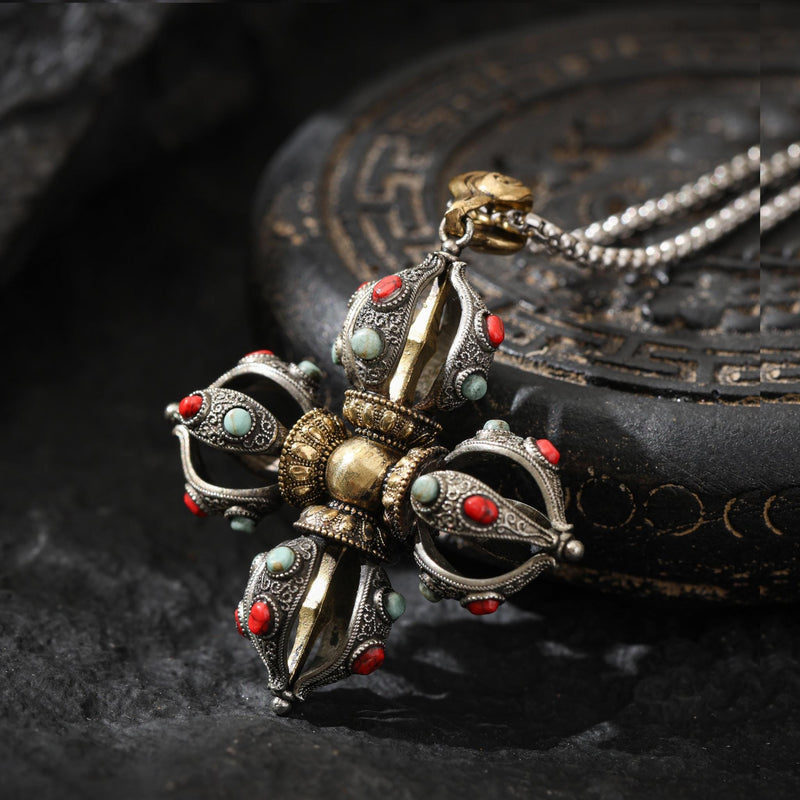
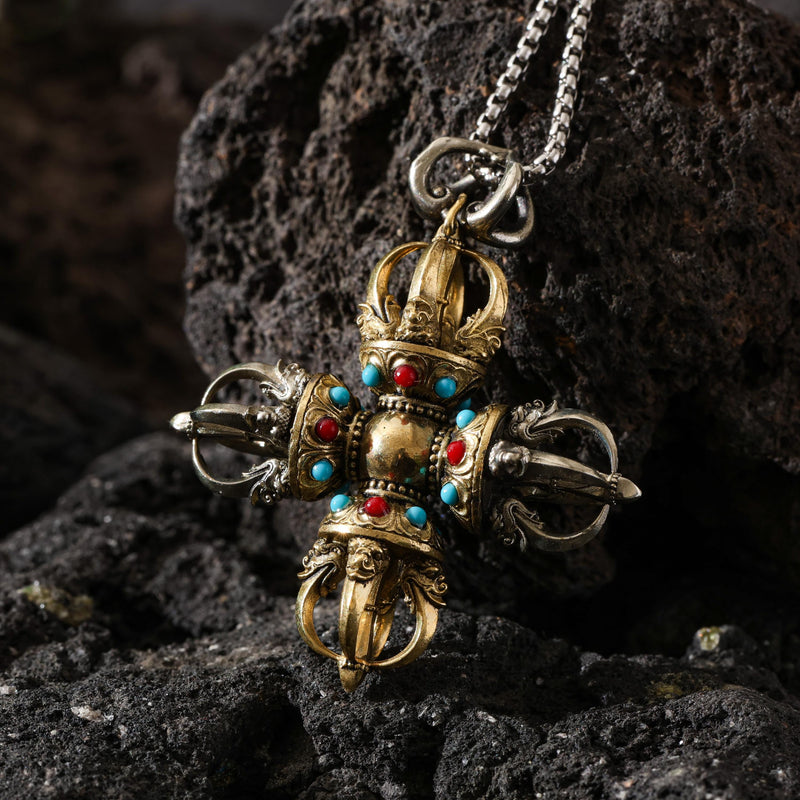
A turquoise necklace sits over the throat and the heart — the two centers turquoise is most associated with — and which one it emphasizes depends on the length.
Higher, at the throat, it leans into communication and honest expression: speaking clearly and truthfully. Lower, at the chest, it rests over the heart, where it becomes a protective, calming stone kept close to your emotional center. Either way, a necklace is the most personal and central way to wear turquoise, and usually the piece people notice first. A turquoise pendant or strand against dark or plain clothing is the pop of color that makes everything else come alive.
How to wear it: A shorter length or a choker sits at the throat and brings out the communication and voice meaning. A longer pendant drops toward the heart, leans into the protective and emotional side, and is easier to layer with other necklaces. Keep the chain simple so the stone leads — turquoise is the kind of color that doesn't need much help.

Bracelet — turquoise on the hand
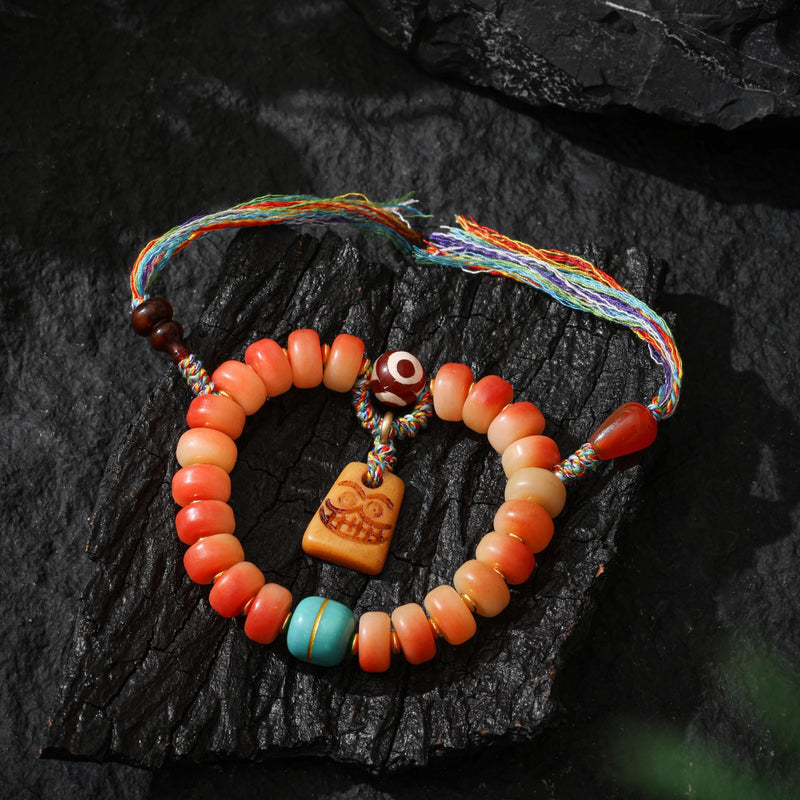
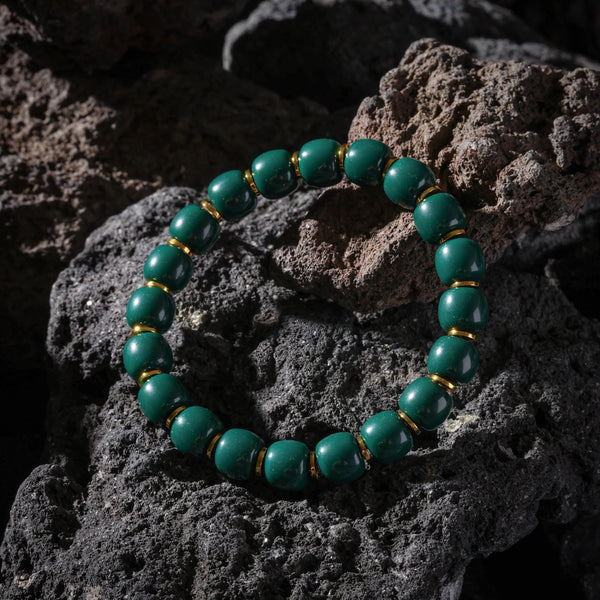
On the wrist, turquoise sits at the hand — where you act, reach, and meet the world — and right at the pulse.
This is turquoise as everyday protection in action: the traveler's stone, worn exactly where your hand moves through the day. It's also the most hands-on form. You can see it and touch it whenever you glance down, which makes it a calming anchor you come back to without even thinking about it — a small, steady point of color and reassurance through an ordinary day.
How to wear it: Traditionally the left wrist suits a protective, receiving stone, though there's no strict rule — wear it on the wrist where you'll actually keep it on. Turquoise beads or a single stone both work well, and it layers easily because the blue-green goes with almost anything. Reach for it, or simply touch it, when you want a moment of calm.

A quick comparison
| Form | Where it sits | What it emphasizes | Best for |
|---|---|---|---|
| Earrings | By the face | Clear communication and calm thinking; the most expressive | Framing the face and finishing a look |
| Necklace | Throat or heart | Honest expression (at the throat) or protection close to the heart (at the chest) | A personal, central lead piece |
| Bracelet | Wrist and hand | Everyday protection in action; a calming touchpoint | An all-day reminder you can see and touch |
Wearing and caring for turquoise
A quick word on styling: turquoise is a pop of color, so a little goes a long way. It looks its best against simple, calm backgrounds — dark clothing, neutrals, denim, leather — and it pairs beautifully with both cool silver and warm gold or brass. Let it be the spot of color in a look and keep the rest understated.
If you wear several turquoise pieces at once, treat one as the lead — usually the necklace — and let the others support it. Repeating the blue-green across two or three spots makes it read as a choice rather than an accident, and a little breathing room keeps the whole thing from feeling crowded.
A bit of simple care keeps turquoise looking its best, too. It's a natural stone with a soft surface, so keep it away from perfume and lotion, which can dull it over time, and give it an occasional gentle wipe with a soft cloth. The easy habit is to put your turquoise on after your scent and skincare, not before. Worn and looked after simply, it stays bright and lovely for years.
Wherever you wear it, turquoise does the same quiet work — protecting, calming, and bringing a piece of sky down to the body. Earrings frame your face with it, a necklace keeps it close to your heart and your voice, and a bracelet puts it right where your hand meets the world. Choose the spot that fits what you want it to do, and let it be the calm, bright thing you carry through the day.