




What's inside
- What fortune really means
- Dzi — turning luck and gathering it in
- Turquoise — the fortune of not losing what you have
- The Dice — making peace with chance
- Yellow Jambhala — abundance that begins with giving
- Zaki Lhamo — fortune that turns around
- How to wear them, and which one to choose
- What we carry, and why
What fortune really means
Here's the thing most of these traditions agree on, even though they grew up far apart: fortune was never treated as pure random luck — something that just falls on you out of the sky. It was understood as a relationship.
You attract it, yes. But you also protect it, so you don't lose what you've gained. You stay open to it, so you can recognize it when it comes. You keep your footing when it turns against you. And in some traditions, you give freely, so it keeps flowing instead of stalling.
The five objects here each stand for a different part of that relationship. Wearing one isn't a bet that good things will rain down. It's a reminder of how to stay on good terms with your own luck — which, when you think about it, is most of what good luck actually is.

Dzi — turning luck and gathering it in
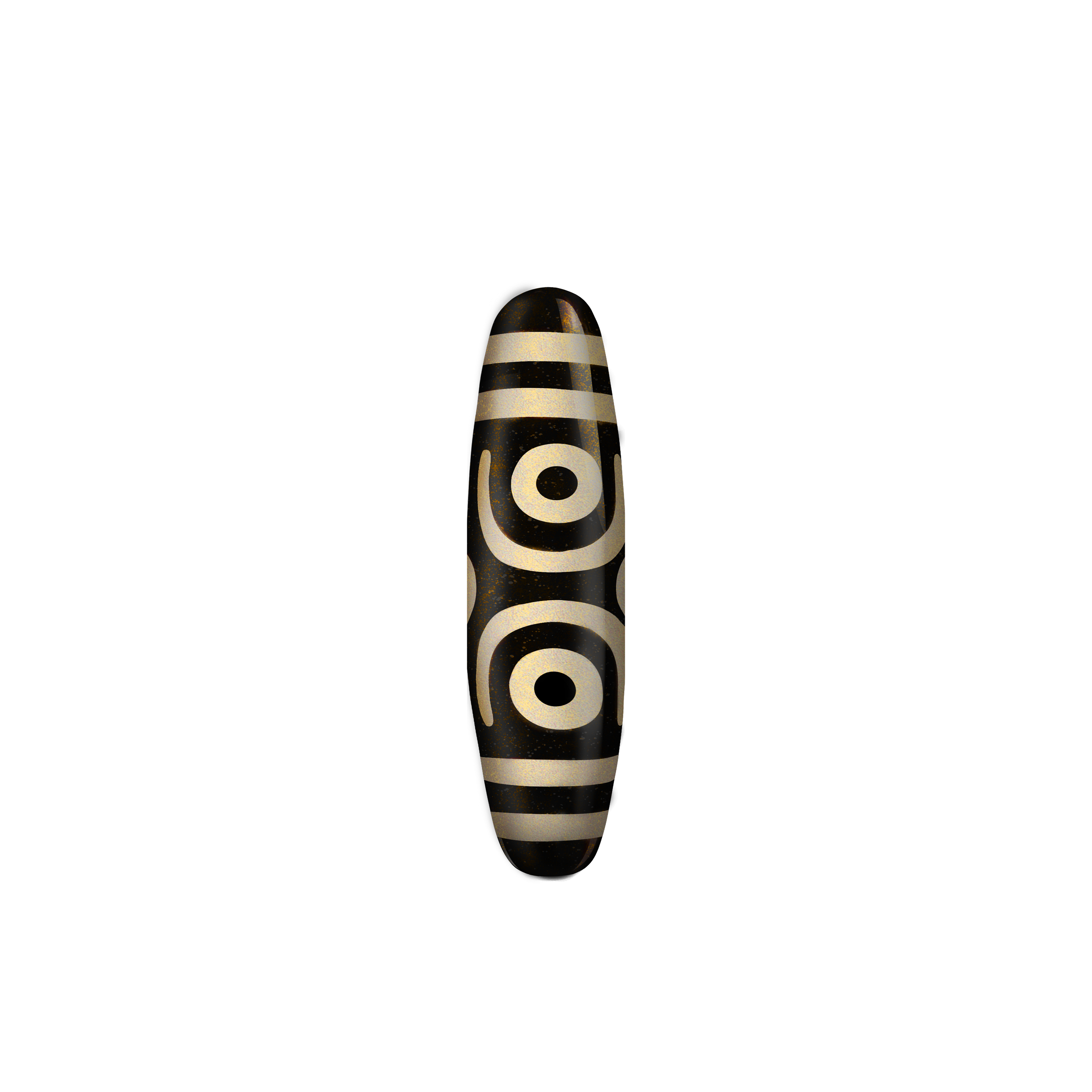
The Dzi bead is a banded agate bead from the high Tibetan plateau, prized above almost any other object in Tibetan culture. Families pass them down for generations, and a genuine old one can be worth more than you'd expect a small stone to be.
As a fortune object, the Dzi is known for two things: turning luck and gathering fortune. Turning luck means shifting things in your favor — nudging a situation from stuck to moving. Gathering fortune means drawing good luck toward you and keeping it there. The eyes painted into the stone are said to watch in every direction, so nothing good slips past you and nothing bad sneaks in. The nine-eye Dzi is the most prized of all for wealth and all-round good fortune.
How to wear it: As a pendant at the chest, or as a bead on a bracelet at the wrist. Many people wear theirs close to the skin and rarely take it off, because the tradition holds that it grows stronger the longer it's worn. There are no strict rules here — wearing it consistently matters more than any ceremony.

Turquoise — the fortune of not losing what you have
Turquoise has been worn for safe travel and good fortune across Central Asia for thousands of years, especially by traders and travelers far from home and crossing hard country.
Its fortune meaning is really about protection. Turquoise keeps you safe on the road, so your luck isn't lost to an accident or a bad turn of timing. It's the fortune of holding onto what you've already got. It's also genuinely calming to look at and to hold, which is part of why it's valued — a steady mind makes better decisions, and good decisions are half of good fortune.
How to wear it: A turquoise bead bracelet on the wrist, a turquoise stone set into a ring, or turquoise beads strung through a necklace. It's one of the easiest stones to layer, because its blue-green sits well against almost anything. Wear it when you travel, or simply every day as a steady companion.

The Dice — making peace with chance
The dice come from the Tibetan game of sho — a dice game that doubles as a kind of fortune-telling. As a symbol, the dice are about your relationship to chance itself.
You can't control how dice land. That's the whole point of them. But you can control how you meet the outcome — without panic, without grabbing. The dice stand for staying in good relationship with luck: open, calm, and able to take what comes well. The Tibetan reading is that the quality of attention you bring to chance is what decides whether the encounter leaves you better off or worse. Same roll, different result, depending on how you meet it.
How to wear it: Usually as small carved dice beads on a mala or bracelet — a strand around the wrist or neck. Wear it as a daily reminder that you don't have to control everything; you only have to meet it well. It's the most down-to-earth of the fortune symbols, and a good one for anyone going through an uncertain stretch.

Yellow Jambhala — abundance that begins with giving
Yellow Jambhala is the most widely honored wealth deity in Tibetan Buddhism — the golden god of wealth and abundance. But his story has a twist worth knowing, because it changes what he actually means.
He became the source of wealth not by hoarding it, but by giving everything away. The lesson built into him is that abundance flows through generosity, not through clinging. He holds a mongoose that spits jewels — and the mongoose is the natural enemy of the snake, which in this tradition stands for greed. So Jambhala swallows greed and produces wealth in its place. His job is to clear away whatever is blocking prosperity from reaching you.
He stands for material abundance, yes — but the honest, lasting kind. The kind that comes and stays because you keep the channel open by giving rather than gripping.
How to wear it: Often carried as a pendant or kept in a small pouch you take with you, or placed where you work and make decisions. People who wear Jambhala are traditionally encouraged to also practice giving — to share a little before asking for more — because that's the whole principle. Wear it when you're building something, or when money feels stuck and you want to get it moving.

Zaki Lhamo — fortune that turns around
Zaki Lhamo is Tibet's only female wealth deity, honored at the only wealth temple in Tibet. Her story is the most striking of the five. She began as an outsider, went through real hardship, and rose to become a sovereign goddess of fortune — brought low and then remade into something that couldn't be brought low again.
That's why she stands for a very particular kind of fortune: the reversal. She's the one people turn to when their situation feels stuck in a bad direction and they need it to turn around. Because she knows what it is to be at the bottom and come back, she's understood to help others do the same. She's also a guardian of women, and of anyone who's been knocked down and is working to get back up.

How to wear it: As a pendant, a charm on a bracelet, or a small figure kept close. Wednesday is traditionally her most responsive day. Wear her when you're in a hard stretch and need things to turn — she's the reversal in this set, the one for when luck has been running the wrong way and you need it to run the right way again.
How to wear them, and which one to choose
You don't need all five. The better approach is to pick the one that fits where you actually are right now.
- Building something? Yellow Jambhala.
- In a bad stretch and need it to turn? Zaki Lhamo.
- Facing real uncertainty? The dice.
- Want to protect the good fortune you already have? Turquoise.
- Want broad, all-round luck? The Dzi.
If you do want to wear several together — say a Dzi pendant at the neck, a turquoise bracelet at the wrist, and a Jambhala charm — keep one piece as the lead and let the others support it, repeat a color or a metal so they connect, and leave a little breathing room so the look doesn't feel crowded. These pieces all belong to the same family, so they layer together naturally.
What we carry, and why
We don't carry these things because we believe good luck lives inside a bead. We carry them because fortune is uncertain, and uncertainty is a hard thing to hold in the mind alone.
An object gives the feeling something to hold onto. It reminds you, when things are good, not to grip too tightly — and when things are hard, that luck turns, that you can meet whatever comes, that abundance flows back toward the open hand. That's what fortune objects have always been. Not a guarantee. A reminder of how to stay on good terms with a thing none of us fully controls.
And you don't have to believe in any of it for that to be worth carrying.

