

What's inside
- What a 108 mala is, and why 108
- How to use it — the basic method
- Worn as a necklace: carrying the practice
- Held in the hand: doing the practice
- A quick comparison
- Simple ways to use it in daily life
- Caring for your mala
What a 108 mala is, and why 108
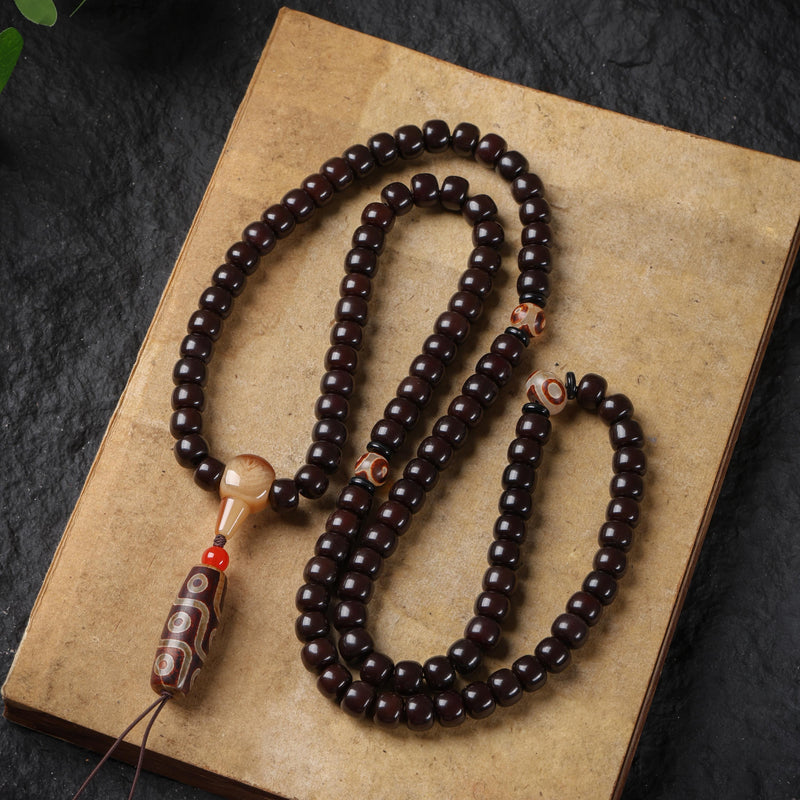
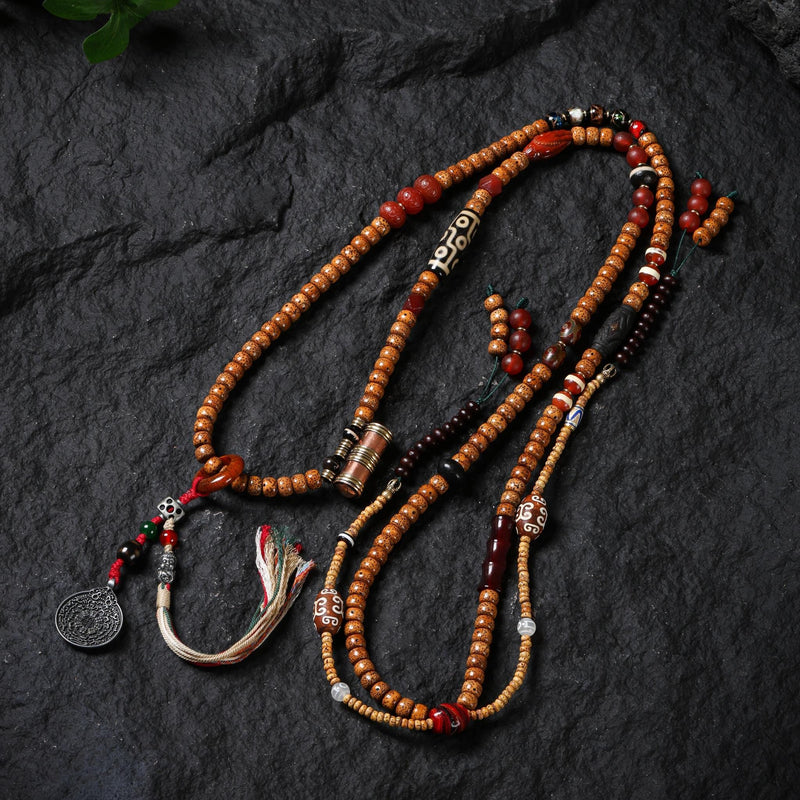
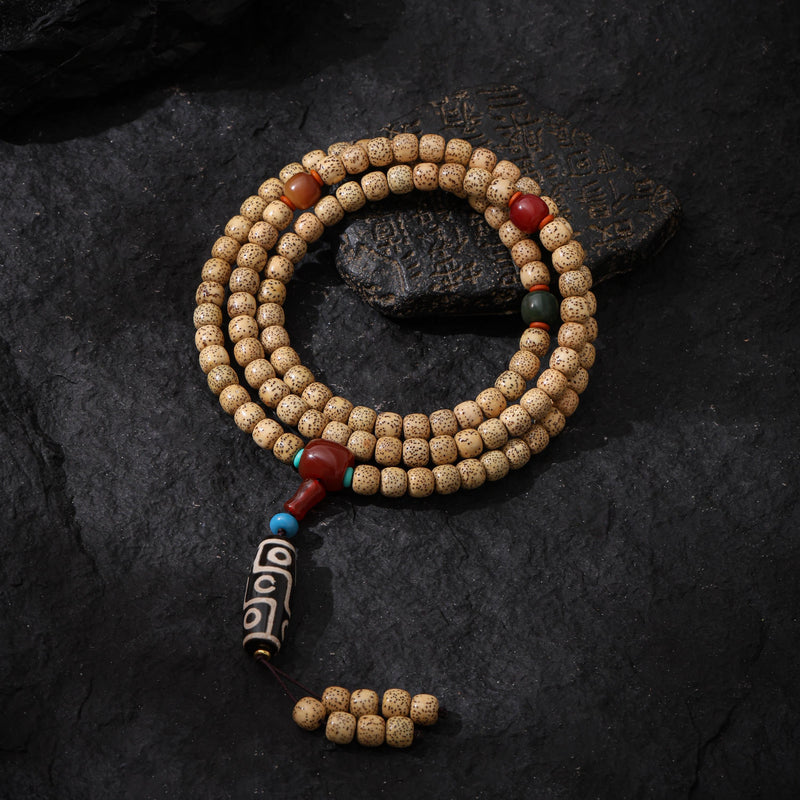
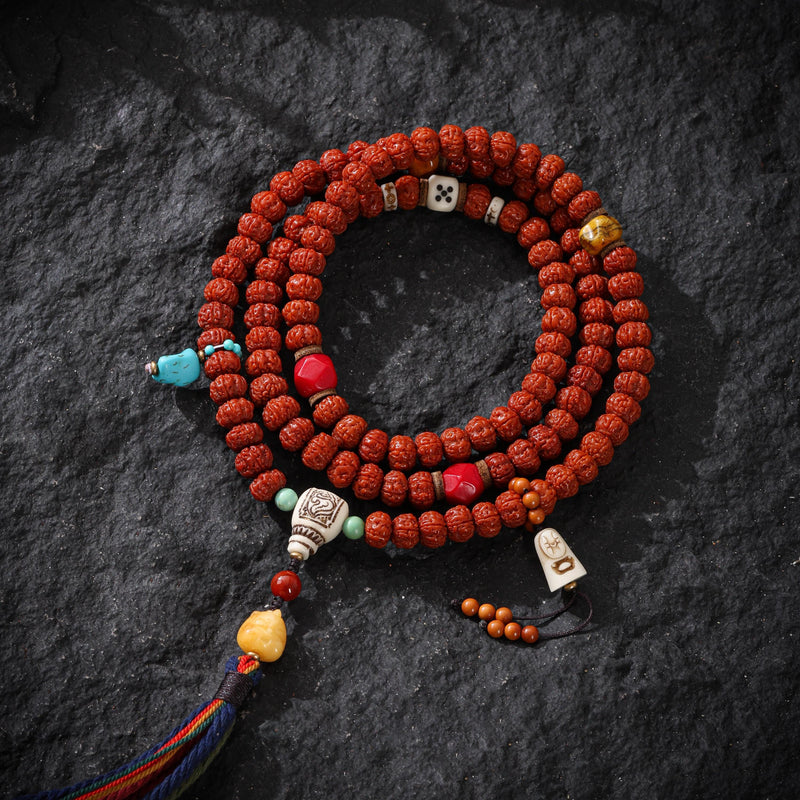
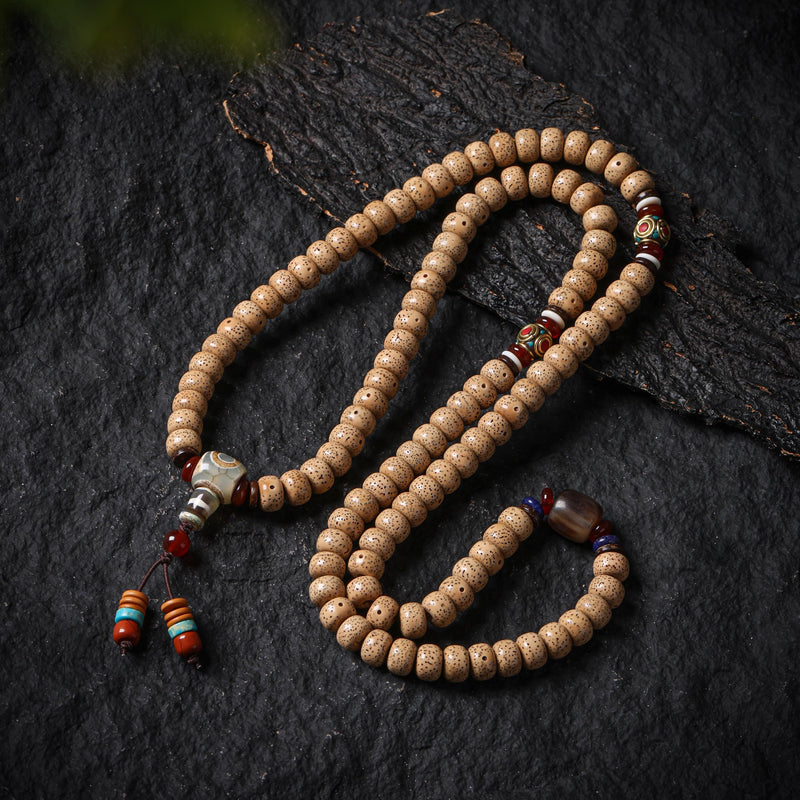
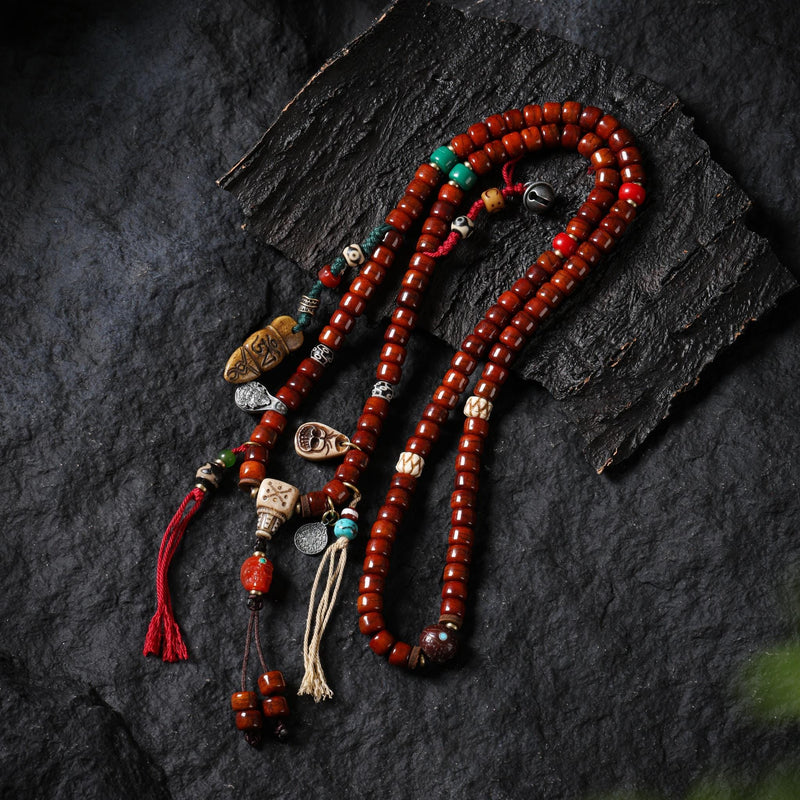
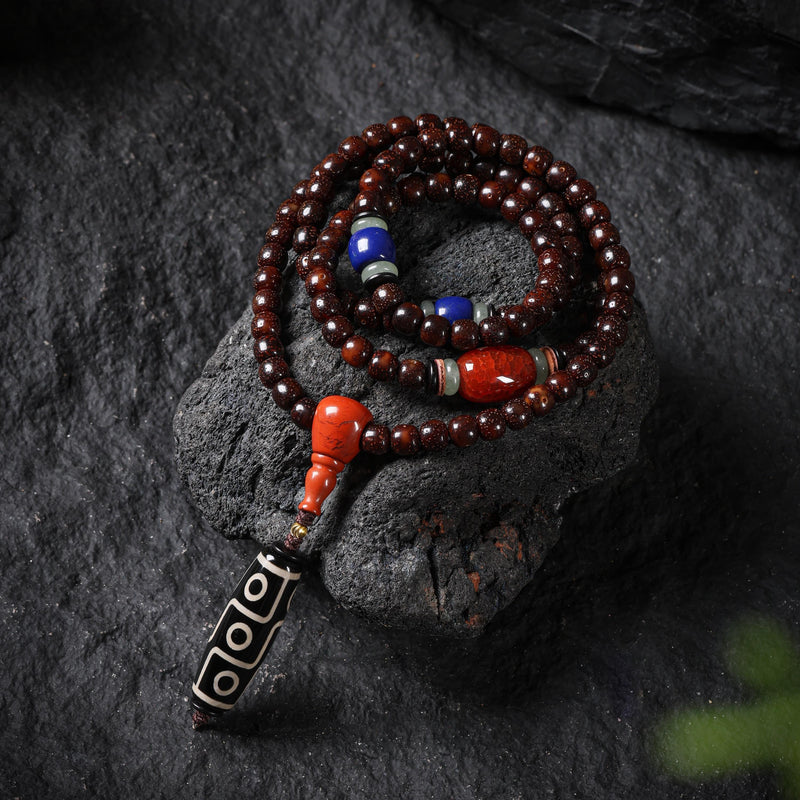
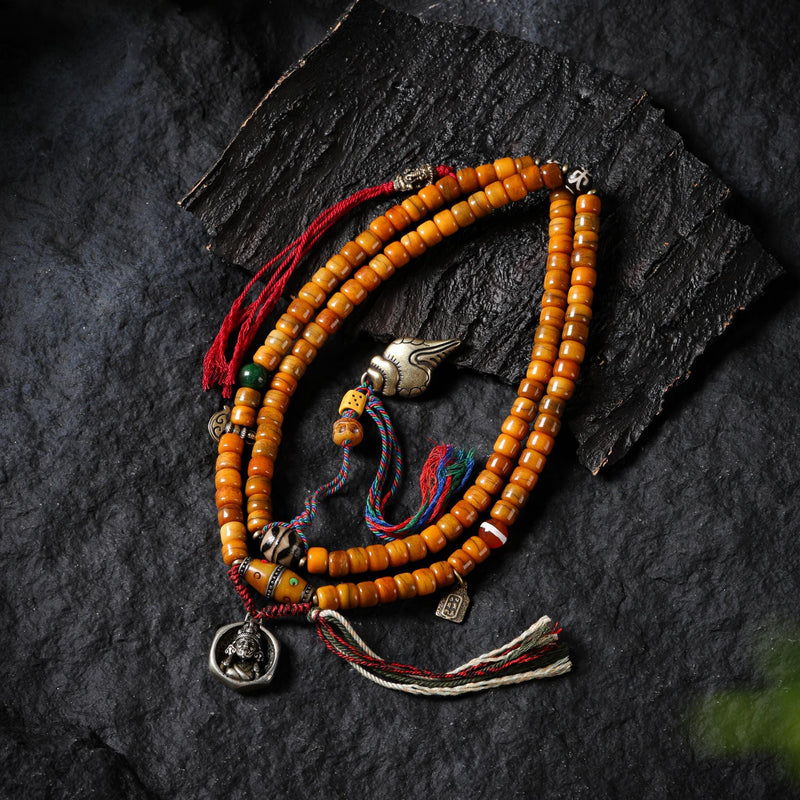
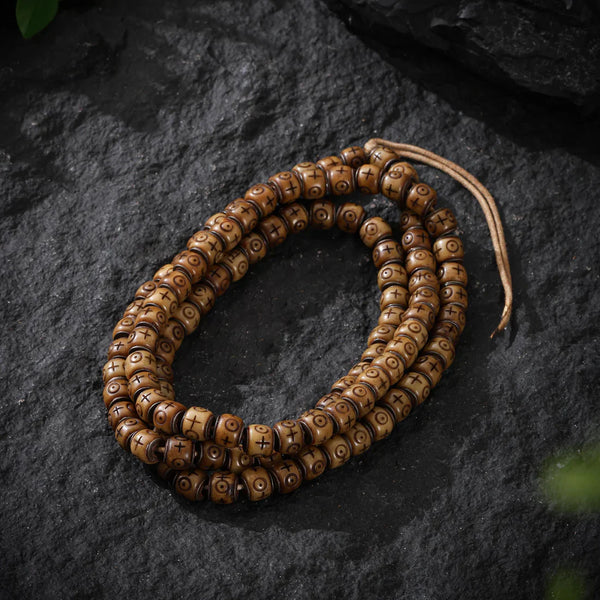
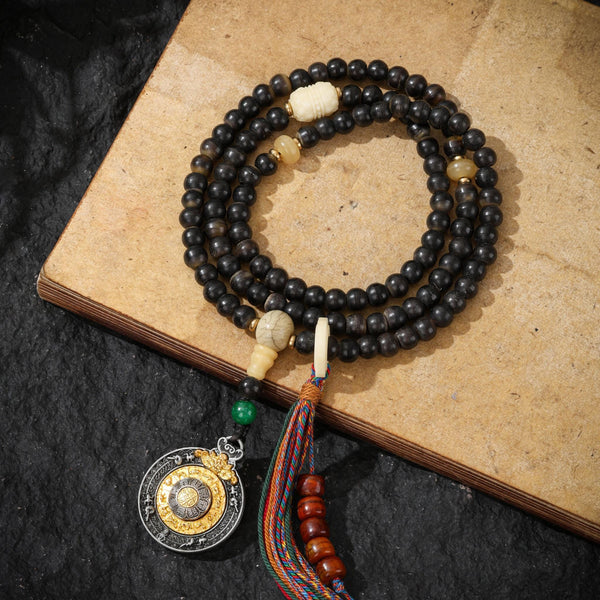
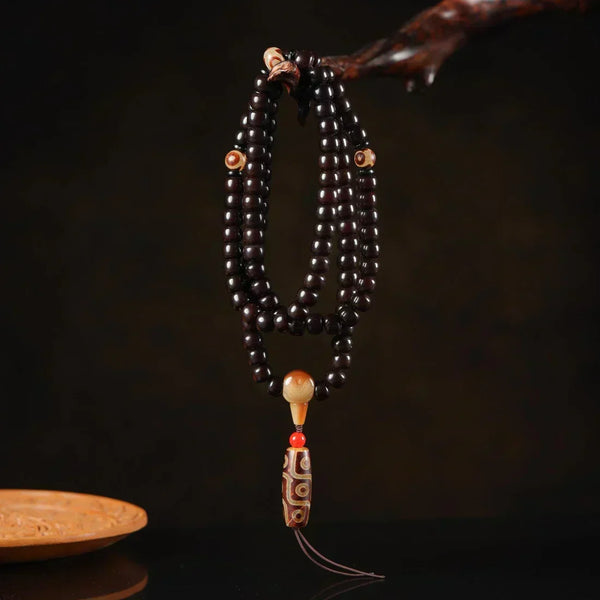
A mala is a string of beads used to count during meditation — a set of prayer beads, in plain terms. A full one has 108 counting beads, plus one larger bead called the guru bead, often finished with a tassel, which marks where a round begins and ends.
So why 108? Many traditions hold the number sacred, and there are several lovely explanations. One simply reads the digits: 1 for the one whole, 0 for emptiness or completeness, 8 for infinity. Another counts 108 everyday habits or cravings to work through along the path. You don't need to settle on a single meaning. What matters in practice is that 108 is a complete round — enough repetitions to actually settle the mind, and few enough to finish in a handful of minutes.
The guru bead is the one you never count and never cross over. When your fingers reach it, you've completed one full round of 108. More on that just below.

How to use it — the basic method
The mala's real job is counting, and the counting is exactly what frees your mind to focus. Here's the simple, traditional way to do it.
Hold the mala in your right hand, draped over your middle finger. (The index finger is traditionally kept aside, since it's associated with the ego — though don't worry too much about that rule.) Start at the first bead next to the guru bead. With each repetition — a mantra, a breath, a word of gratitude — use your thumb to gently pull one bead toward you. Move one bead per repetition, all the way around, until you reach the guru bead again. That's one full round: 108.
There's one small point of etiquette: don't cross over the guru bead. When you reach it, if you want to keep going, simply turn the mala around and go back the other way. Stepping over the guru bead is avoided as a quiet sign of respect for the teacher it represents.
That's the whole method. The point isn't to rush to 108 — it's that giving your hands something steady to do quietly holds your attention in place, so your mind can rest on the mantra or the breath instead of wandering off.
Worn as a necklace: carrying the practice
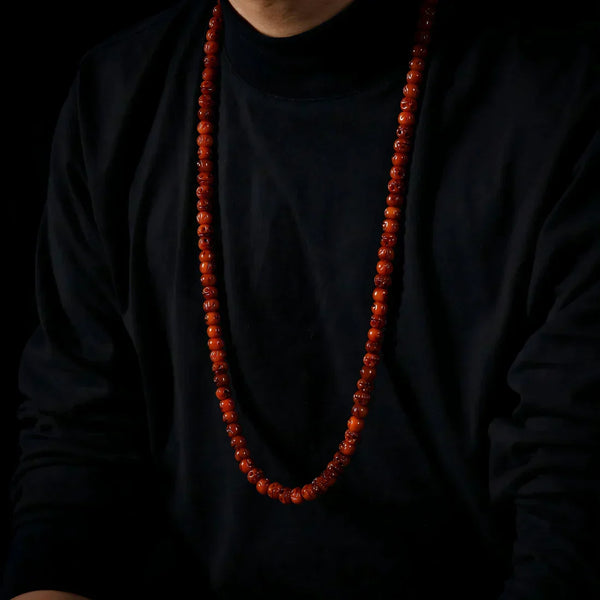
A 108 mala is long enough to wear around the neck, where it drops to the chest or below. Worn this way, it isn't being counted — it's being carried.
The meaning here is about keeping the practice close all day. The mala rests near the heart as a quiet reminder of your intention, a way of carrying the calm of your practice out into the noise of ordinary life. In many traditions, the beads are also felt to hold the energy of the practice done with them, so wearing it keeps that close. And worn against the body, it offers a quiet sense of protection and blessing.
How to wear it: long and single, or doubled if it's especially long, resting over the heart. It can be worn over or under your clothes. Like most sacred objects, a mala is treated with a little care — kept off the floor, and traditionally taken off before the shower or the bathroom.
This is the "carry it with you" mode: the practice as a constant companion, even at the moments when you're not actively using it.

Held in the hand: doing the practice
Held in the hand and counted, the mala is doing its actual job — and this is the mode the beads were really made for.
The meaning here is active practice. The handheld mala is a tool for focusing the mind: each bead is a small anchor for your attention, and the steady move from one to the next is what keeps you from drifting. Where wearing it is about carrying the practice, holding it is about doing the practice.
How to use it: exactly the method above — right hand, draped over the finger, thumb pulling each bead, one per repetition, never crossing the guru bead. You can do it sitting in formal meditation, or anywhere you happen to have a few quiet minutes.
This is the "do the practice" mode: the mala as an active tool, not only a reminder.

A quick comparison
| Way | What you're doing | What it's for |
|---|---|---|
| Worn as a necklace | Carrying the mala on your body | Keeping the practice and its calm close all day; a reminder and a blessing |
| Held in the hand | Counting bead by bead | Active practice — focusing the mind on a mantra, breath, or intention |
Simple ways to use it in daily life
You don't have to sit cross-legged for an hour to get something from a mala. A few easy ways to bring it into an ordinary day:
- A morning round. Before the day gets going, do one slow round while setting an intention — calm, patience, whatever you need that day.
- With a mantra. Pick a short phrase (the classic is Om Mani Padme Hum) and say it once per bead. The repetition settles the mind quickly.
- With the breath. One bead per breath — inhale, exhale, move a bead. This is the simplest calming practice there is, and you can do it anywhere: a waiting room, a commute, a hard moment.
- A gratitude round. Name one thing you're grateful for per bead. You'll be surprised how far 108 goes.
- A few beads when you're stressed. You don't always need the full round. When something rattles you, a handful of slow beads and slow breaths is enough to come back to yourself.
- An evening round. One slow round at the end of the day to put it down and wind toward rest.
The point of all of these is the same: a few quiet minutes with something steady in your hands, returning your attention to the present.
Caring for your mala
A mala is treated with a little respect — kept off the floor, set down gently, and stored somewhere safe rather than tossed loose in a bag. Many people keep theirs on a small hook, a stand, or a dish when they're not wearing it.
If your mala is made of natural beads — wood, seed, or bone — it warms and deepens beautifully the more you handle it, growing richer with time. An occasional gentle wipe with a soft cloth is all it needs.
Mostly, though, a mala wants to be used. The more you hold it, wear it, and practice with it, the more it becomes yours — a steady companion that's there whenever you need to come back to a calm, clear place.
Whether you wear it at your heart or hold it in your hand, a 108 mala does one quiet thing: it gives your mind somewhere steady to rest. Carry it as a reminder, use it to practice, or both — and let it be the simple, steadying habit you return to in the middle of an ordinary day.