

What's inside
- Turquoise is a living stone
- How it changes — from bright blue to seasoned green
- Why it changes
- Why every piece changes differently
- The tradition — a stone that lives with you
- Why the change is something to treasure
Turquoise is a living stone
Most stones look the same on the day you buy them as they will decades later. Turquoise is different. It's a natural stone that's alive to being worn — it gently changes over time, deepening and warming as it's lived with.
This is one of the oldest-known and most loved qualities of turquoise. Across Tibet, Persia, and the American Southwest, people have always known that a piece worn for years grows richer and deeper than a new one — and they have prized the old, seasoned stones most of all. So when your turquoise begins to change, nothing is going wrong. The stone is doing exactly what natural turquoise has always done: becoming yours.

How it changes — from bright blue to seasoned green
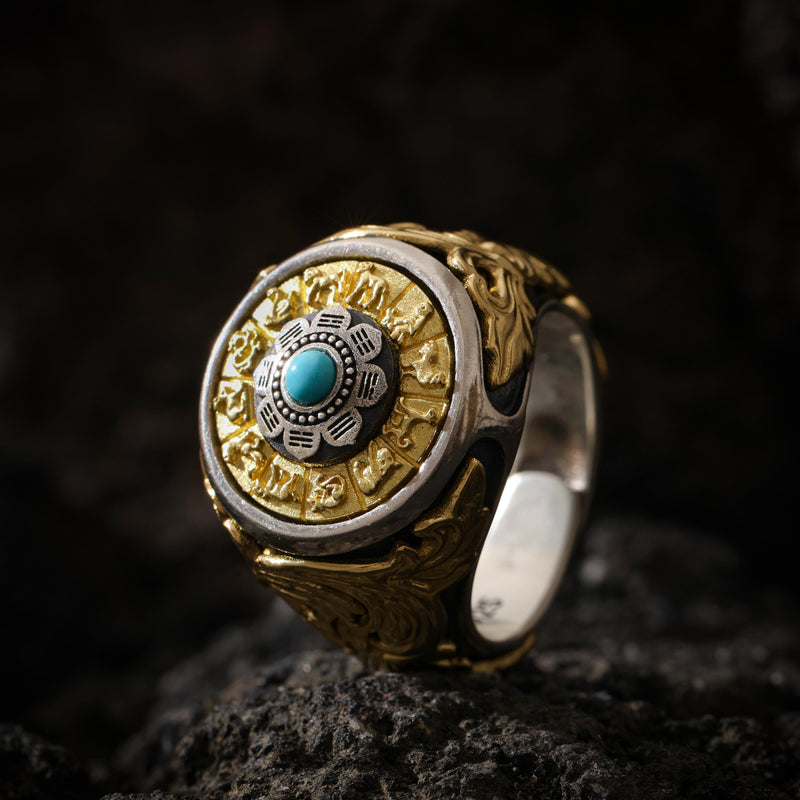
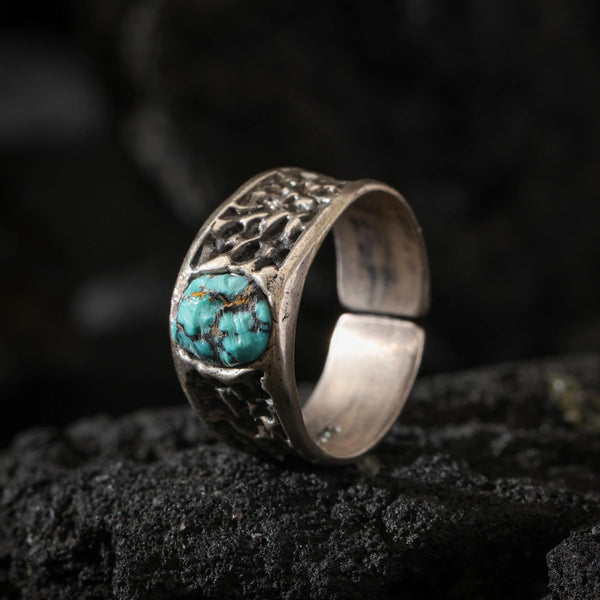
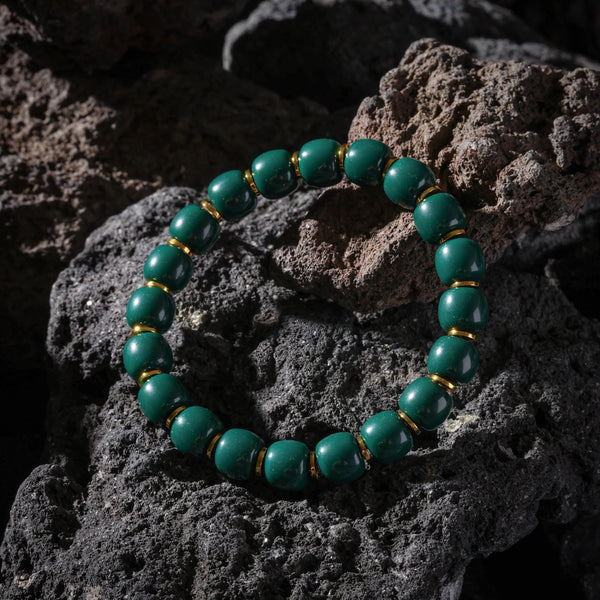
New turquoise often begins as a bright, clear sky blue. Over time, worn close to the body, it gradually deepens — the blue mellowing toward green, the whole stone settling into a warmer, more seasoned tone. The natural veining running through the stone tends to become more visible and characterful as it matures, and the surface takes on a soft, settled glow — the look of a stone that's been worn and loved rather than one fresh from the case.
The pace varies, but here's a rough sense of the journey:
| What changes | What happens over time |
|---|---|
| Color | The bright sky blue gradually deepens and mellows toward a warmer, richer green-blue |
| Veining | The natural lines through the stone become more visible and full of character |
| Surface | A soft, settled glow develops — the look of a stone with history |
In the first months the shift is subtle, just a gentle softening of the bright blue. Over a year or two, the green tones come forward more clearly. Over many years, the stone can deepen into a rich, warm green-blue that looks lit from within — the treasured color of old, well-worn turquoise.

Why it changes
Turquoise is a natural stone — it isn't sealed or solid all the way through like glass. That natural openness is what lets it slowly take on the warmth and character of being worn close to the skin, day after day. Over time, that gentle, everyday contact deepens its color and draws out its character.
In other words, the change comes simply from being worn — from the warmth of your body, the touch of daily wear, and living with the stone close to you. It's the same kind of slow, natural deepening you see in fine leather or natural wood: the material quietly responds to being used and loved. The passing of time, warmth, and light all play their part too. None of it is anything you need to manage. It's just what a natural stone does when it's lived with.
Why every piece changes differently
No two pieces of turquoise change in quite the same way, because no two people wear them the same way. The warmth of your skin, the climate you live in, how often you wear it, even the time of year — all of it shapes how your stone deepens.
A piece worn every day matures faster than one worn now and then. A stone worn in a warm climate may deepen differently from one kept in a cool one. This is exactly why turquoise becomes so personal. It isn't changing on a fixed schedule toward a fixed result — it's changing along with you, shaped by your life and your habits. Two people could buy the same piece on the same day and, a few years later, have stones that look quite different from each other. Each one carries the quiet record of the person who wore it.

The tradition — a stone that lives with you
This changing quality is a big part of why turquoise has been treasured for so long. In Tibet especially, it wasn't seen as a fixed object but as something alive — a stone that lived alongside its wearer.
There's an old belief that turquoise changes along with the health and fortune of the person who wears it, even taking on hardship to protect them. Whether or not you read it that way, it captures something real about the stone: it doesn't stay separate from you. It responds to being worn, it takes on the character of your days, and over the years it becomes a kind of quiet record of the time you've spent together. The deep green of an old Tibetan turquoise isn't a worn-out stone — it's a stone with a history, and traditionally the most valued of all.
Why the change is something to treasure
Here's the most important thing to understand: the fact that your turquoise changes is good news. It's one of the surest signs that you have a genuine, natural stone. Treated or imitation turquoise stays exactly the same forever — it never deepens, never warms, never takes on any character, because there's nothing living about it. A stone that changes is a stone that's real.
So if your bright blue turquoise has started to mellow toward green, it isn't fading or spoiling. It's maturing — exactly as natural turquoise has always done, and exactly as the most prized old stones did before it. What you hold now is the beginning of that journey. What you carry years from now will be deeper, warmer, and entirely your own.
A little simple care helps it along nicely. Turquoise is a natural stone with a soft surface, so keep it away from perfume and lotion, which can dull it over time, and give it a gentle wipe with a soft cloth now and then. The easy habit is to put your turquoise on after your scent and skincare, not before. Worn often and looked after simply, it will keep deepening beautifully for years.
Turquoise is one of the few stones that doesn't just sit on your skin — it grows with you. The longer you wear it, the more it becomes a piece of your own story, written slowly in deepening blue and green. And that, more than any single shade, is what makes a piece of turquoise truly yours.