

What Makes One Lapis Lazuli Stone Different from Another?
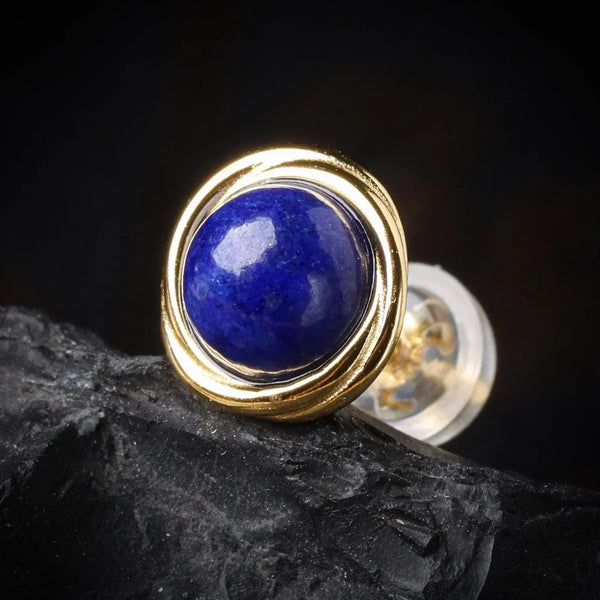
Two lapis lazuli pendants catch your eye. One is an almost uninterrupted field of deep blue. The other has tiny golden flecks scattered across its surface, with a few pale veins running through the stone.
Which would you choose?
It is tempting to assume that the darkest blue is always the best, or that golden flecks are a sign of superior quality. In reality, choosing lapis lazuli involves more than looking for a particular color or pattern.
The stone itself, its natural variations, the way it has been cut and polished, and the information provided by the seller all matter. Once you understand these details, you can look beyond a product photograph and make a more informed choice.
Start with the Blue, but Look Beyond Color
Lapis lazuli is a rock composed of several minerals, principally lazurite, calcite, and pyrite. Lazurite gives it its characteristic blue, while the proportions and distribution of its mineral components influence the stone's overall appearance.
Fine lapis lazuli is often admired for its rich, saturated blue, ranging from deep royal blue to violet-blue. However, color should not be judged by darkness alone.
A very dark stone may appear almost black in certain lighting, while a slightly lighter blue can show more depth and character. Photographs can also make the same stone look different depending on the lighting, background, and editing.
When shopping online, look for:
-
Color saturation: Does the blue look rich and clear, or dull and grayish?
-
Color distribution: Is the color relatively even, or does it shift noticeably across the surface?
-
Lighting: Are there photographs in natural-looking light, rather than only heavily edited images?
-
Consistency: Do close-ups and different product views show a similar color?
There is no need to search for a single perfect shade. Instead, consider whether the stone's actual color suits the design and whether the product photographs give you a reliable impression of it.

Golden Flecks and White Veins: What Are You Looking At?
One of the most recognizable features of lapis lazuli is the contrast between its blue body color and the minerals visible within it.
The golden, metallic-looking flecks are typically pyrite. White or pale veins and patches are often calcite. These features are part of the stone's natural mineral composition, although their presence and distribution vary.
When golden flecks add character
Small, well-distributed pyrite flecks can create a subtle contrast against deep blue. In a pendant or bead, they may catch the light and give the surface a more varied appearance.
But more pyrite does not automatically mean better quality. Large, dense clusters may compete with the blue rather than complement it. Some fine lapis lazuli contains little or no visible pyrite.
What white markings can tell you
White veins or patches may come from calcite. In conventional gem-quality assessments, conspicuous calcite can reduce the desirability of lapis lazuli, particularly when it interrupts the blue body color.
That does not mean every pale marking makes a stone unattractive. A natural pattern may be part of what draws you to a particular piece. The important distinction is between appreciating a stone's appearance and assuming that every natural-looking feature indicates higher quality.
A useful rule: Look at the whole stone. Consider the balance between blue, golden flecks, pale markings, and the overall design rather than judging one feature in isolation.
Natural Does Not Always Mean Untreated
A stone may be natural lapis lazuli and still have undergone treatment to change or improve its appearance.
Some lapis lazuli is dyed to deepen its color or make pale areas less noticeable. Other material may be impregnated with wax or oil to improve its color or luster. Imitations made from materials such as glass, plastic, or ceramic may also be sold to resemble lapis lazuli.
These are different situations, and they should not be treated as interchangeable.
- Natural material describes what the stone is.
- Treatment describes whether its appearance or properties have been altered.
- Imitation describes a different material made to resemble the stone.
For buyers, the practical question is not simply whether the stone is blue enough. It is whether the product description accurately identifies the material and discloses relevant treatments.
When reviewing a listing, look for clear information about the stone, any known enhancements, and the seller's basis for making claims about authenticity.
If the purchase is particularly valuable or the distinction matters to you, an independent gemological assessment can provide more reliable information than photographs alone.
Avoid relying on home tests involving solvents, heat, scratching, or other potentially damaging methods. Such tests may harm the jewelry and are not a dependable substitute for professional identification.

Quality Is More Than the Raw Stone
A beautiful piece of lapis lazuli jewelry depends on more than the material itself. Cutting, polishing, setting, and overall design all affect the finished result.
Cut and shape
Lapis lazuli is commonly fashioned into beads, smooth cabochons, flat inlays, and carved forms. Each treatment creates a different visual effect. A rounded cabochon emphasizes the stone's broad surface of blue, while beads create a repeated rhythm of color and natural markings.
Surface and polish
Look for a finish that suits the design. The surface should not have unexplained damage, and visible pits or rough areas should be consistent with the product description. A polished stone should also be assessed in the context of its intended style rather than by shine alone.
Setting and construction
For pendants and rings, check whether the stone sits securely and whether the surrounding metalwork looks carefully finished. For bead necklaces and bracelets, look at the consistency of the beads, the quality of the stringing, and the way the piece is assembled.
Proportion and wearability
A large stone may create a dramatic focal point, while smaller beads or a compact pendant may be easier to incorporate into everyday outfits. Consider the size, weight, and setting alongside the stone's appearance.
A higher price does not automatically guarantee better craftsmanship. The materials, construction, design complexity, and quality of the product information should all make sense together.

What About Origin? Look for Evidence
Lapis lazuli has historically been associated with several mining regions, including Afghanistan and Chile. The stone's appearance can vary, but color and mineral markings alone cannot reliably establish where an individual piece came from.
Terms that refer to a country or region may describe a commercial category or a general style. They are not necessarily proof of geographic origin.
If a seller claims that a piece comes from a specific mine or region, look for supporting documentation where available. The same principle applies to claims that a piece is antique, handmade in a particular place, or made using a traditional technique.
A responsible product description should distinguish what is known from what is inferred. When the origin cannot be verified, it is better to say so than to turn an attractive possibility into a fact.
Choose for Your Style, Not Just a Quality Label
After considering the stone itself, think about how you will wear it.
If you prefer understated jewelry, a pendant with a relatively even blue surface may work well with white shirts, neutral knitwear, or tailored jackets. If you enjoy distinctive details, a stone with scattered pyrite flecks may bring more texture to a simple outfit.
Beads and larger carved forms can make a piece feel more substantial, while a smaller stone may fit easily into a layered look.
Also consider how often you plan to wear it. Lapis lazuli has a Mohs hardness of approximately 5–6, so it can be scratched or damaged by hard knocks. Rings and bracelets generally encounter more contact with surrounding objects than pendants or earrings. The setting and the way you wear the piece therefore matter as much as its visual appeal.
The best choice is not necessarily the rarest-looking stone. It is a well-described, thoughtfully made piece whose appearance and practical details suit your needs.

A Practical Checklist Before Buying
Before placing an order, ask yourself:
-
Color: Do I like the stone's actual shade and the way its color is distributed?
-
Natural pattern: Are the pyrite flecks and pale markings visually appealing to me?
-
Material: Does the seller clearly identify the stone?
-
Treatment: Are known dyes, coatings, or other enhancements disclosed?
-
Craftsmanship: Do the cut, polish, setting, and assembly look appropriate for the design?
-
Origin: Are specific origin claims supported by evidence?
-
Wearability: Is the size, weight, and setting suitable for how I intend to wear it?
-
Price: Does the overall quality and product information justify the price?
You do not need to become a gem expert to make a thoughtful purchase. You simply need enough information to understand what you are buying and why you like it.
FAQ
Are golden flecks a sign of high-quality lapis lazuli?
They are usually pyrite, a natural mineral component. Fine, attractive flecks can complement the blue, but their presence alone does not establish quality or authenticity.
Is darker lapis lazuli always better?
No. Rich, saturated blue is often desirable, but color distribution, calcite markings, overall appearance, craftsmanship, and treatment disclosure also matter.
Can I tell whether lapis lazuli is dyed by looking at it?
Not reliably in every case. Some treatments are difficult to identify from photographs or casual inspection, so clear seller disclosure or professional assessment may be necessary.
Does Afghan lapis lazuli always come from Afghanistan?
A label referring to Afghanistan is not, by itself, proof of origin. Reliable documentation is needed to substantiate a specific geographic claim.
Choose with Your Eyes Open
Lapis lazuli does not have to be perfectly uniform to be beautiful, and a striking pattern does not automatically make a stone valuable. Its appeal comes from the relationship between its blue color, natural mineral variations, craftsmanship, and the design in which it is set.
Take a closer look at the stone, ask questions when important information is missing, and choose a piece for both its appearance and the quality of the object itself.
Explore AURA DEER for jewelry that brings natural materials and distinctive design into contemporary life.