


What's inside
- What the bell is — wisdom you can hear
- What it wakes
- The handheld ritual bell — and how to ring it
- Wearing the bell: necklace and bracelet
- A quick comparison
- Caring for your bell
What the bell is — wisdom you can hear
The Tibetan bell is one of the most recognizable objects in Tibetan Buddhism, and it almost never appears alone. It's the partner of the vajra. In practice, a person holds the vajra in the right hand and the bell in the left, and rings them together. The vajra stands for method and compassion — active, steady strength. The bell stands for wisdom — the deep understanding of how things really are. Held together, they're the two halves of awakening. You need both, which is why they're always a pair.
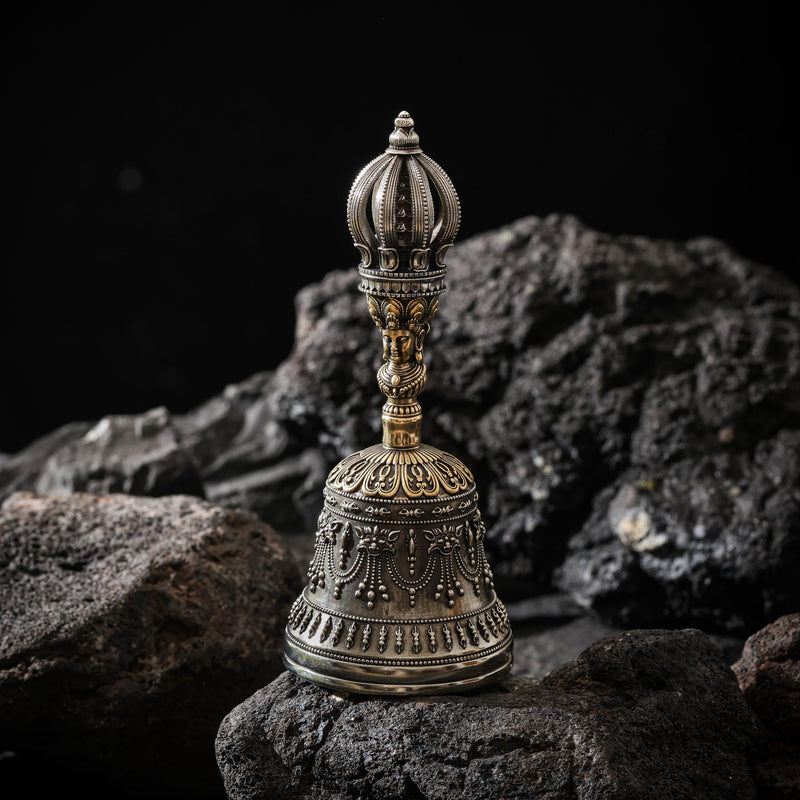
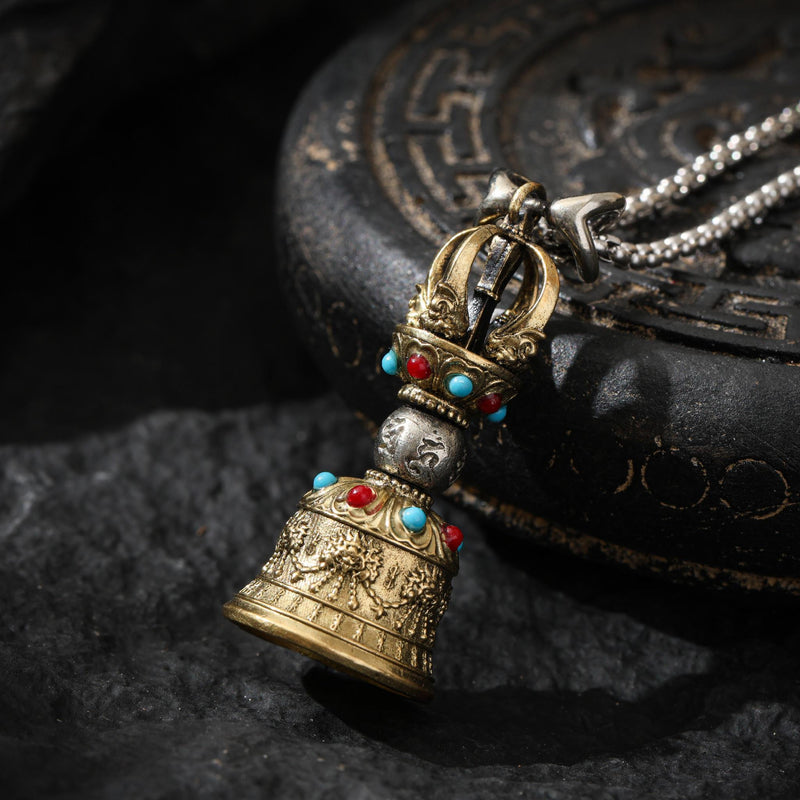
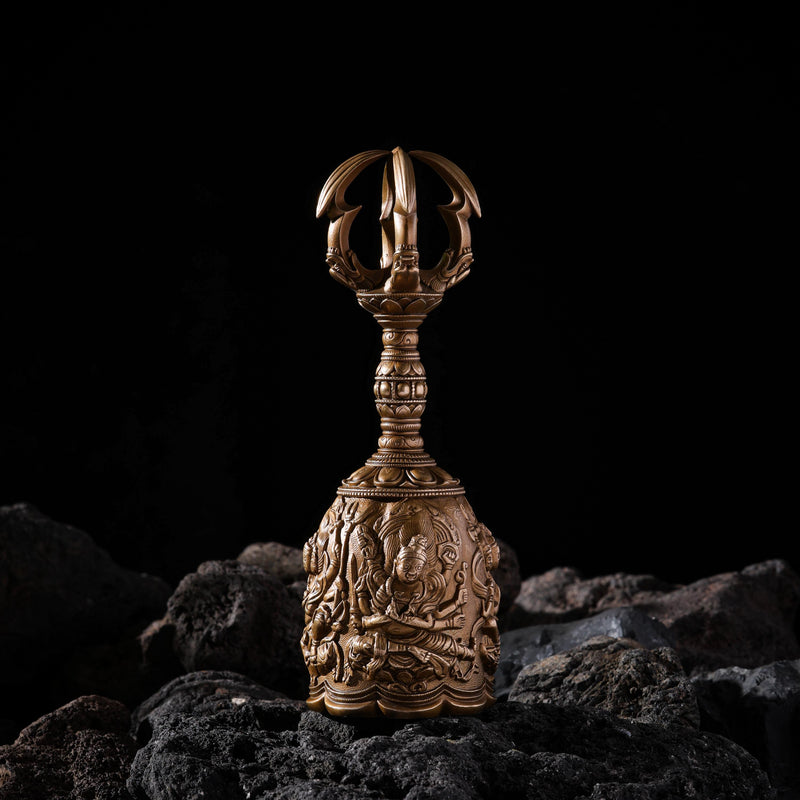
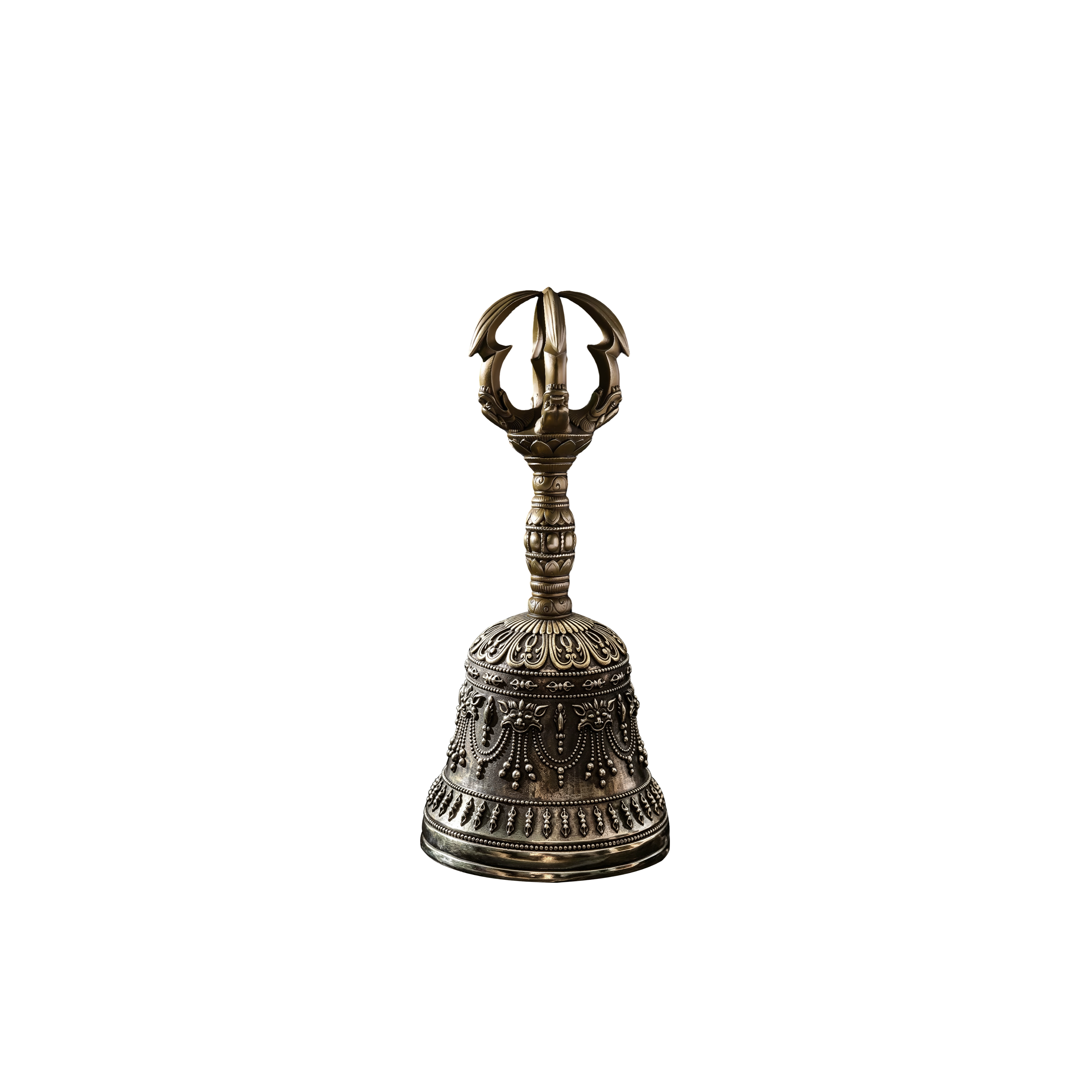
The bell's form carries that meaning. The serene face often worked into the handle is the figure of wisdom itself, pictured as a calm, watchful presence. The hollow space inside the bell stands for openness — the spacious, uncluttered quality of an awake mind. And the half-vajra on top ties the bell back to its partner, so that even on its own it carries both ideas.
But the bell's real power isn't in how it looks. It's in how it sounds.

What it wakes
The whole point of a bell is the sound, and the sound does something specific: it wakes you up.
When your mind is foggy, scattered, or lost in thought, a single clear ring cuts straight through it and lands you back in the present. That's why bells begin and end meditations, mark the turning points in a ceremony, and are rung to clear a room. The sound is a doorway back to now.
There's also a quiet teaching in the way the sound behaves. It rises out of silence, rings clear, and slowly fades back into silence. Nothing made it; it sounds; it's gone. If you listen to a bell all the way until you can't hear it anymore, you've just watched something appear and pass — the whole of impermanence in a few seconds. Listening to the sound disappear is itself the practice.
So "what it wakes" is simply awareness — presence, attention, the part of you that's actually here rather than lost somewhere in your head. The bell is a wake-up call you can hold in your hand or wear on your body.
The handheld ritual bell — and how to ring it
The full bell is the traditional form, and the one used in real practice. It's held in the left hand, often paired with a vajra in the right. Using it well is less about technique than about attention, but a few simple points help.
Hold it lightly by the handle. There's no need to grip it hard.
Ring it gently. A bell doesn't respond to force — a soft, clean strike gives the clearest and longest tone. Heavy ringing actually muddies the sound.
Then stop and listen. Let the sound ring all the way out until it fades completely into silence. Don't rush to the next thing. The listening is the point — that's the part that brings you back to the present.
Use it to mark thresholds. Ring it at the start of a sit and the end of one, at the beginning of a day's work, or in any moment when you want to clear your head and begin again fresh. Many people also ring a bell when they enter a space they want to feel calm and present in.
Even set down on a desk or an altar, the bell works simply as an object you can reach for whenever you need to reset.

Wearing the bell: necklace and bracelet
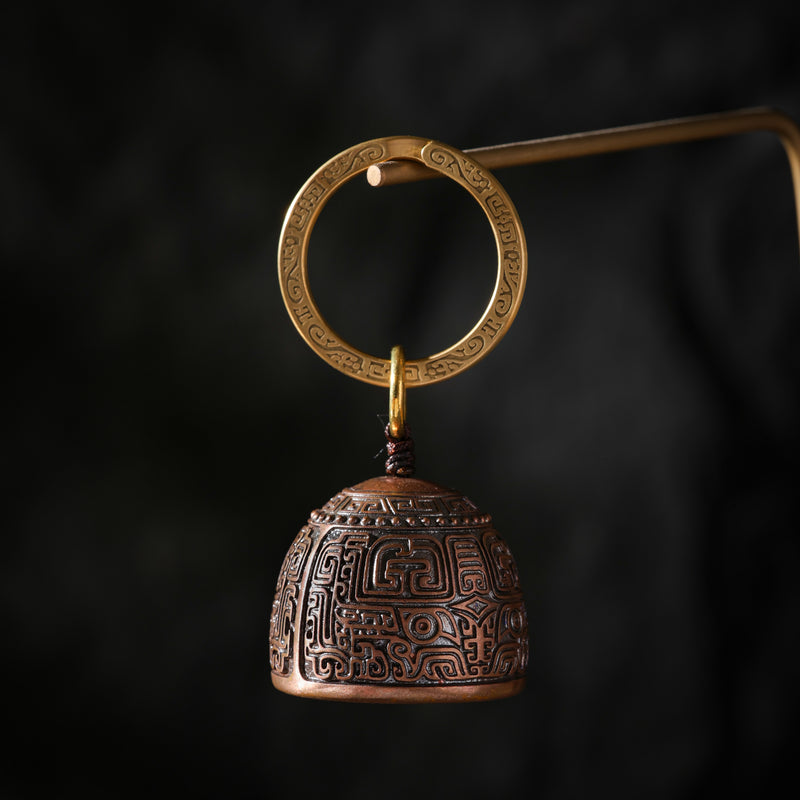
You don't have to ring a full ritual bell to carry the bell's meaning. The smaller wearable forms keep it with you all day, and many of them chime softly on their own as you move — a gentle, ongoing version of the same wake-up.
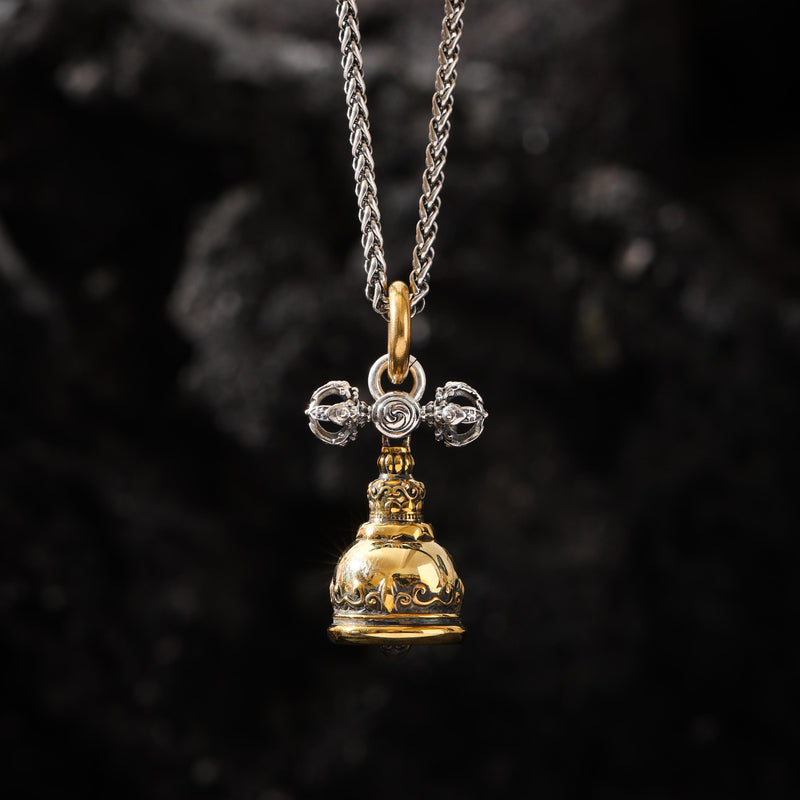
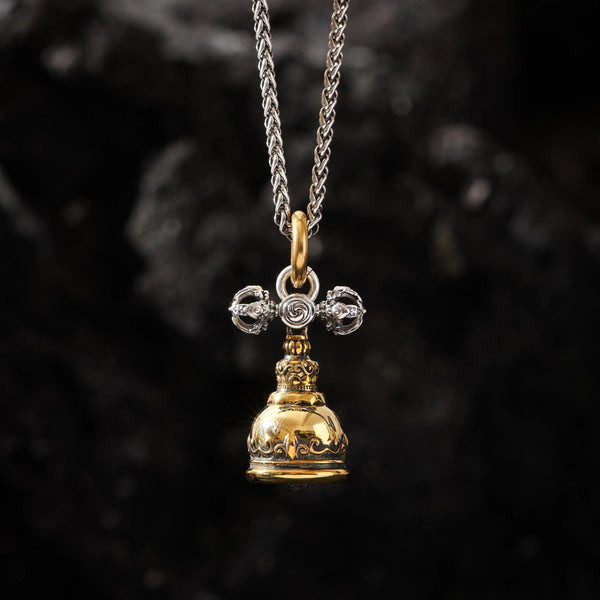
As a necklace. A bell pendant is worn at the chest, near the heart — the natural place for a symbol about awareness. When the pendant has a vajra on top, it carries both halves in one piece: wisdom in the bell, method in the vajra. Most small bell pendants give a faint, soft chime as you move, so you get a quiet reminder through the day without doing anything at all. Wear it at the center of the chest, on its own or alongside a vajra. A chain that lets the pendant rest on the upper chest works well, giving the bell room to move and sound. It reads as a quiet, meaningful piece rather than a loud one.

As a bracelet. A small bell charm on the wrist moves with your hand and chimes gently through the day. This is the most everyday form — low-key, always with you, and the soft sound as you reach or gesture is a small, repeated call back to the present. Traditionally the left wrist suits the bell, since the bell is the left-hand implement in ritual — the wisdom side — though there's no strict rule, so wear it wherever you'll actually keep it on. The gentle chime, many times a day, is the whole charm of it: a tiny wake-up that asks nothing of you.

A quick comparison
| Form | How you use it | Best for |
|---|---|---|
| Handheld bell | Rung in practice or to clear a space, then listened to as it fades | Someone who wants a real ritual object to ring and return to |
| Necklace | Worn at the chest; chimes softly as you move | A personal, close reminder of wisdom and presence |
| Bracelet | Worn on the wrist; chimes gently through the day | An everyday, low-key wake-up you don't have to think about |
Caring for your bell
A bell is treated with a little respect in the tradition. Keep a ritual bell off the floor, set it down gently rather than knocking it against a hard surface — a hard knock can dull a fine tone — and store it somewhere safe.
Silver bells and pendants soften into a warm, lived-in look over time; if you prefer them bright, an occasional wipe with a soft cloth keeps them that way. Gold-toned and brass pieces warm and deepen the more you wear them, growing richer with time.
Mostly, though, a bell asks to be used. Ring it. Wear it. Let it sound. The more it becomes part of your day, the better it does its one job — waking you up, again and again, to the life that's actually in front of you.
The vajra holds you steady; the bell wakes you up. Carry one, and you carry a small, clear sound that brings you back to the present every time you hear it — which, in a noisy world, might be exactly the thing worth keeping close.