Table of Contents
- The Ancient Roots of a Silent Symbol
- The Vocal Resonance: Tuning Into A-U-M
- Why OM Is the Glyph of Enduring Commitment
- Worn Today: Commitment as Daily Armor
The Ancient Roots of a Silent Symbol
OM first emerged not as a drawn character, but as sound.
Its origins stretch back millennia to the oldest Vedic oral traditions, where it was understood as the primal vibration of all existence — the tone from which the world arose, and the frequency to which all things return. It opens every prayer, closes every ritual, and marks both beginning and end in one continuous syllable. There is no true start, no final finish. Only presence, repeated.
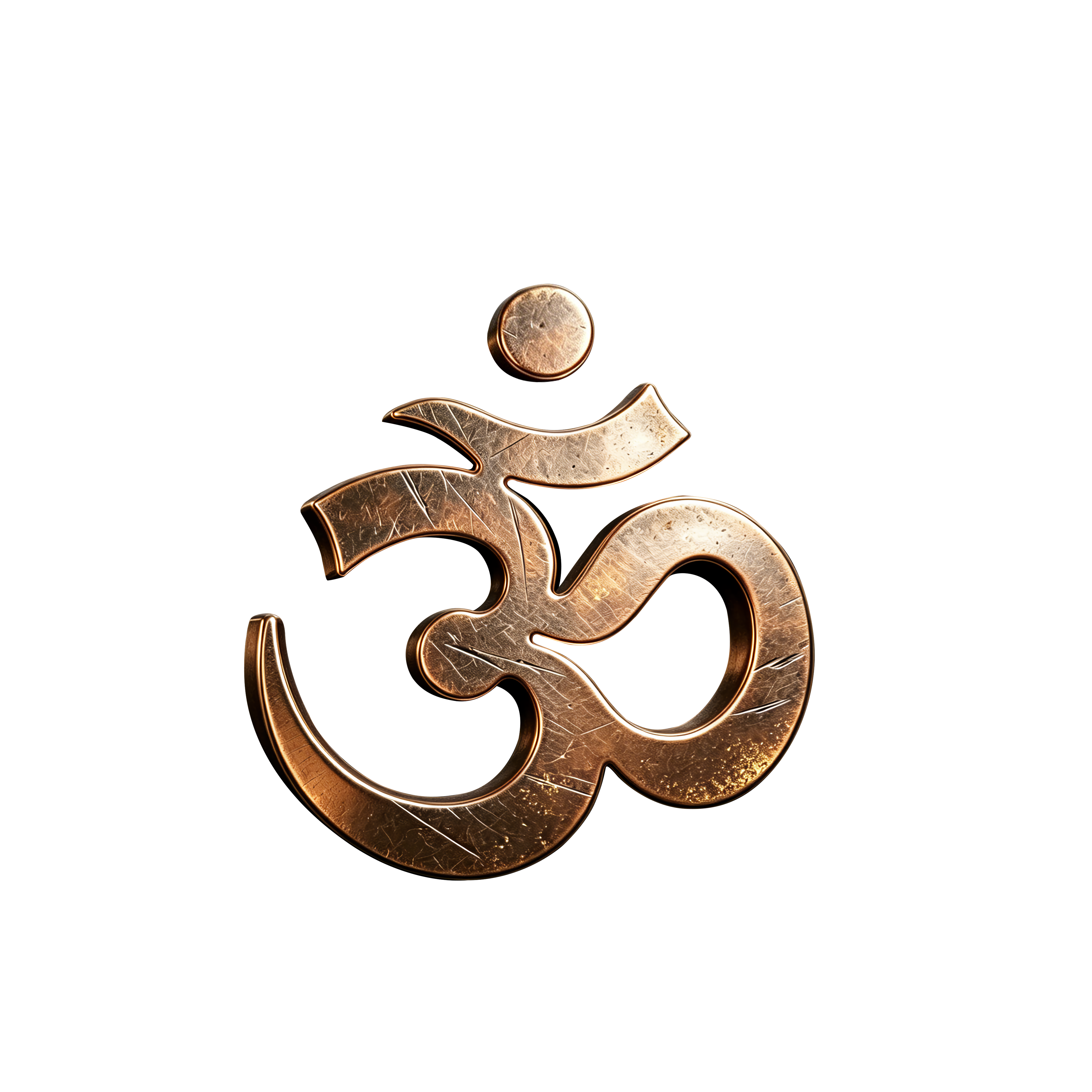
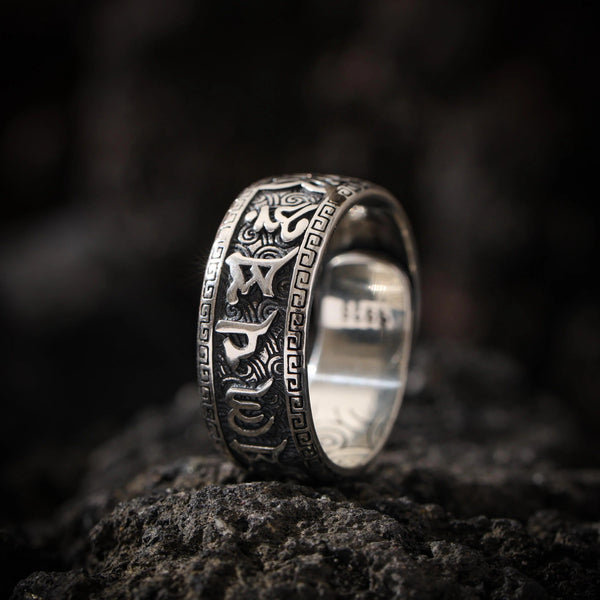
As the sound traveled across the Himalayas into Tibetan spiritual life, it merged with the Six-Syllable Mantra Om Mani Padme Hum, the most widely carried prayer in the region. As the first syllable of the mantra, OM frames every intention: it is the root of devotion, the start of the cycle, and the thread that runs through every repetition. Carved into prayer wheels, stone walls, and small personal amulets, the sound became a shape — a glyph that could be carried, touched, and worn, even when no chant was spoken.
The shape itself holds the logic of connection. Its lower curves trace the ordinary states of waking and dreaming; the upper dot marks the stillness of unshaken awareness; the arc between them is the bridge between the life we live and the vows we hold. In one single, unbroken line, it mirrors commitment itself: a bond that connects where we are to who we choose to be, across distance, across time.

The Vocal Resonance: Tuning Into A-U-M
The OM is not just a visual symbol; it is a physical, vibrating energy code.
When properly chanted, the word is split into three distinct syllables: A - U - M. Each letter represents a phase of existence—Creation, Maintenance, and Transformation—creating a powerful physical resonance in your body:
A (Ah) — The Throat Focus
Action: Initiated deep at the back of the throat with an open mouth.
Resonance: You will feel the vibration awaken your lower chest and throat area.
Meaning: The opening of sound. It represents the beginning of all things and the spark of creation.
U (Oo) — The Chest Focus
Action: The sound rolls forward smoothly as the lips slowly round and gather.
Resonance: The vibration shifts upward, gathering and purifying in your middle chest cavity.
Meaning: Preservation, balance, and the steady energy required to maintain your daily path and choices.
M (Mm) — The Crown Focus
Action: The lips close tight, and the tongue rests gently against the roof of the mouth.
Resonance: A deep, warm buzz that vibrates through your teeth, skull, and up to the crown of your head.
Meaning: Transformation, closure, and the quiet resolution of all things into stillness.
When the vibration of the "M" fades, the absolute silence that follows is the truest state of peace.

Why OM Is the Glyph of Enduring Commitment
Within our meaning system, OM is the defining symbol of Commitment, anchored in three quiet truths — constancy, bond, and unspoken devotion. Each layer speaks to a different face of the promises we keep.
First, it embodies unwavering constancy. OM is not spoken once and set aside. It is chanted thousands of times, turned thousands of times in prayer wheels, returned to again and again. True commitment works the same way. It is not made in one grand moment, but in thousands of small, uncelebrated choices to show up. With each repetition, the vow grows stronger; with each turn, the bond deepens. OM turns the abstract idea of “forever” into something you can see, hold, and return to when resolve feels thin.
Second, it carries the weight of unbroken bond. At its core, commitment is a connection — between two people, between a person and their path, between the self and its quietest values. For centuries, OM amulets have been carried as vessels for intention: they hold a prayer when words fail, they bridge distance when people are apart, they keep a vow present even when life pulls focus. A promise held in a symbol does not fade when it goes unspoken. It remains, steady and quiet, as long as the symbol is carried.
Third, it stands for the discipline of staying true. Commitment does not need an audience. It can be a private vow, a shared token, or a mark worn against the skin — known only to the person who carries it. This is the devotional side of commitment: the quiet self-discipline to remain aligned with what you have chosen, even when no one is watching. OM is a silent covenant with oneself. It needs no explanation, no validation, no fanfare. It simply is.
Worn Today: Commitment as Daily Armor
As ancient symbols move beyond temples and scriptures into everyday life, their meaning expands while their core holds. Today, people wear OM not as a statement of faith alone, but as a personal ritual of commitment — tailored to the quiet weight of modern life.
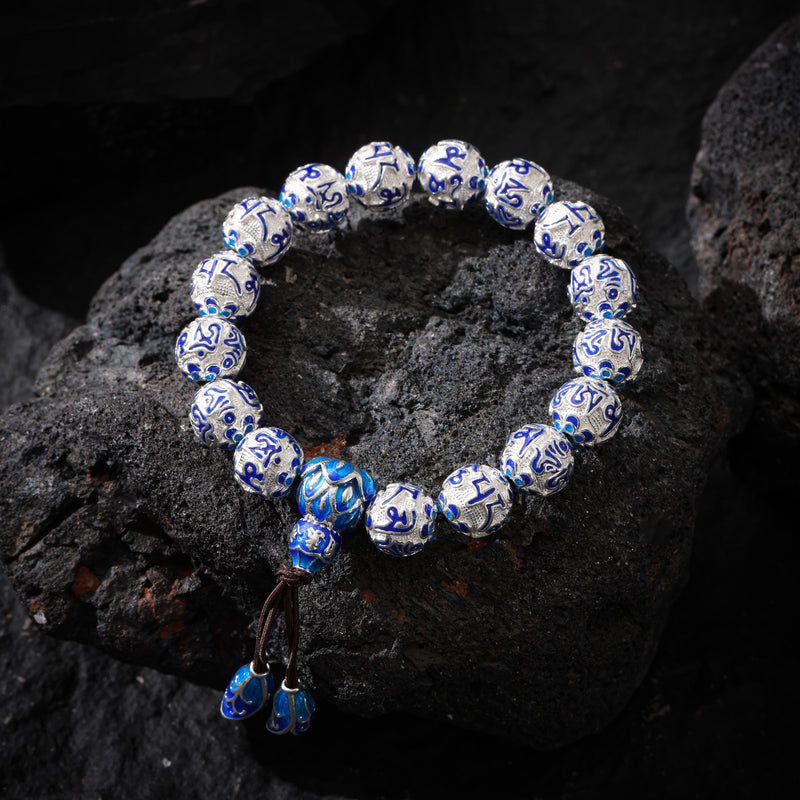
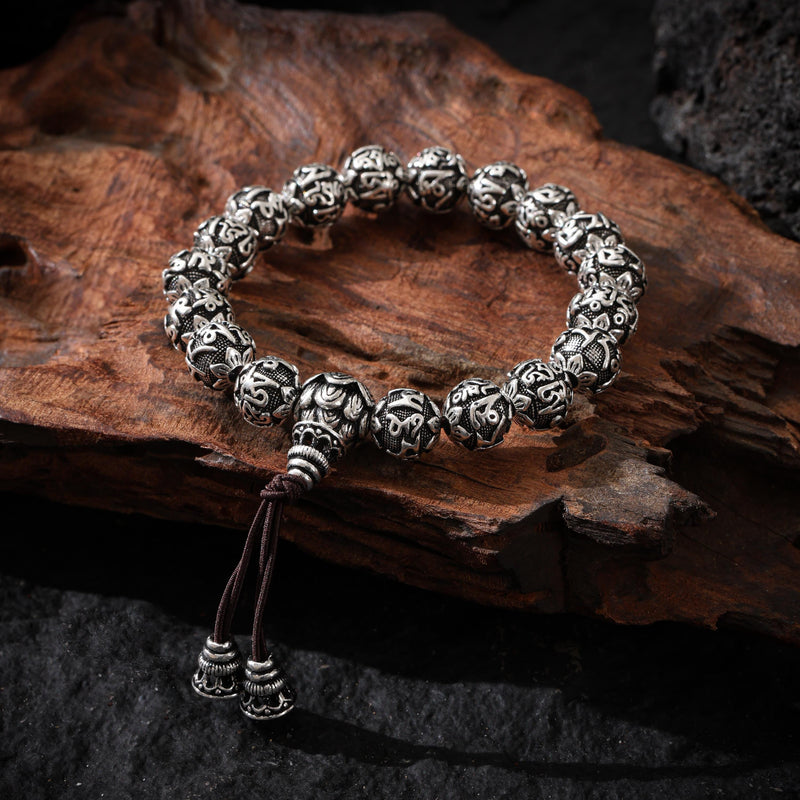
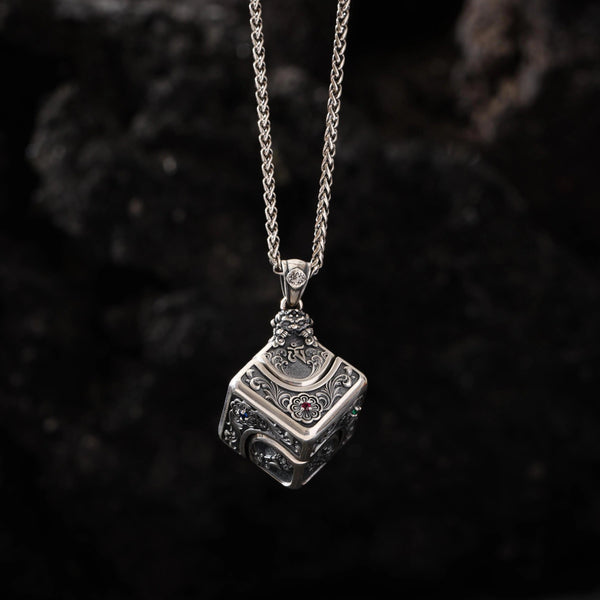
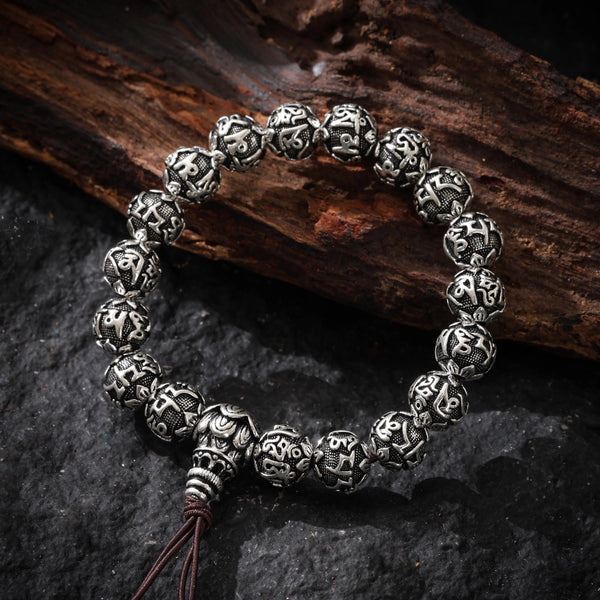
Across thousands of years, OM has traveled from ancient chants to mountain monasteries, and now to the rings, pendants, and bracelets we wear in our daily lives. Its form has adapted, but its core message remains unchanged: commitment is not a single moment. It is a bond chosen over and over, carried through quiet days and hard ones, held in symbols that outlast words.
Whether you wear it as a promise to yourself, to someone you love, or to the life you are building, OM is more than jewelry. It is a reminder that the most enduring commitments are the ones you carry with you, always.