

Table of Contents
- The Misunderstanding Around the Skull Symbol
- Two Cultures, Two Meanings: Western Gothic vs. Tibetan Anitya
- Charnel Ground Wisdom: Where Death Meets Presence
- The Mark of Impermanence: What the Tibetan Skull Actually Represents
- Wearing Remembrance: Carry What Matters, Let the Rest Go
To most people, a skull is a simple, loaded image. It reads as dark, edgy, even ominous — a symbol of death, rebellion, or gothic aesthetics worn for shock value. Many glance at bone skull jewelry and dismiss it as a statement piece for alternative subcultures, something heavy, morbid, or meant only for those drawn to darkness.
This is the first and deepest misunderstanding of the Tibetan skull symbol. It was never created to glorify death, to celebrate decay, or to frighten. It was created to wake us up to life. Rooted in the ancient principle of anitya — impermanence — the skull is not a tribute to endings. It is a quiet, unflinching reminder of how to live while we are here.

Two Cultures, Two Meanings: Western Gothic vs. Tibetan Anitya
It is important to draw the line clearly, because the visual similarity hides an ocean of difference in intent.
In Western popular culture, the skull has long carried connotations of rebellion, danger, and mortality as spectacle. It appears on pirate flags, heavy metal album covers, and streetwear as a symbol of defiance, edge, and rejection of mainstream norms. It says: I am unafraid of darkness, I reject the rules. Its power lies in shock value and countercultural identity.
The Tibetan skull tradition works in almost the opposite direction. It is not rebellious. It is grounding. It does not seek to shock. It seeks to clarify. Across Tibetan spiritual lineages, skull imagery has been used for thousands of years not to dwell on death, but to strip away the illusions that make us suffer in life: the belief that things will stay the same, that we can hold on forever, that status, comfort, and stability are guaranteed.
Charnel Ground Wisdom: Where Death Meets Presence
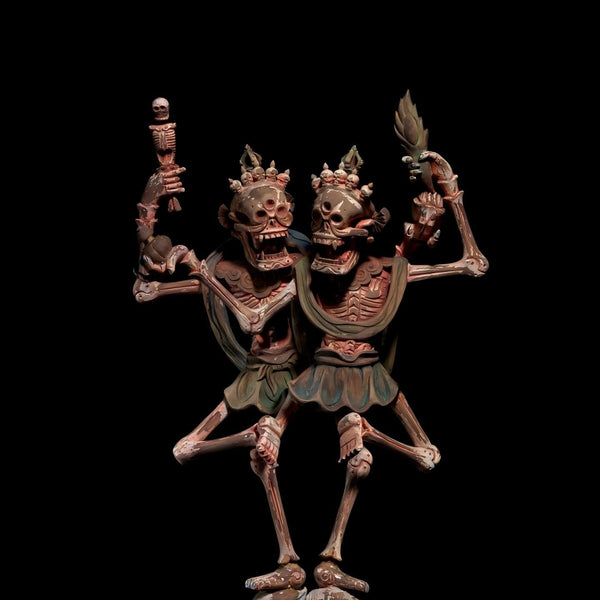
The origin of this symbolism is deeply tied to the charnel ground — the open, wild spaces where bodies were left to decompose in traditional Tibetan cultures. To outsiders, these places sound grim. To practitioners, they were the greatest classrooms on earth.
Meditators would travel to charnel grounds to sit, to reflect, and to confront the one truth every human avoids: that all things fall apart. Bodies decay. Relationships end. Fortunes rise and fall. The self we cling to so tightly is temporary. To sit with that truth, again and again, was not an act of morbidity. It was an act of freedom.
When you truly accept that nothing lasts forever, you stop wasting energy fighting change. You stop grieving the past as if it should have stayed. You stop terrorizing yourself about a future that has not arrived. You stop taking the small, beautiful, ordinary moments for granted. This is the core of anitya: impermanence is not a tragedy. It is the reason every moment matters.
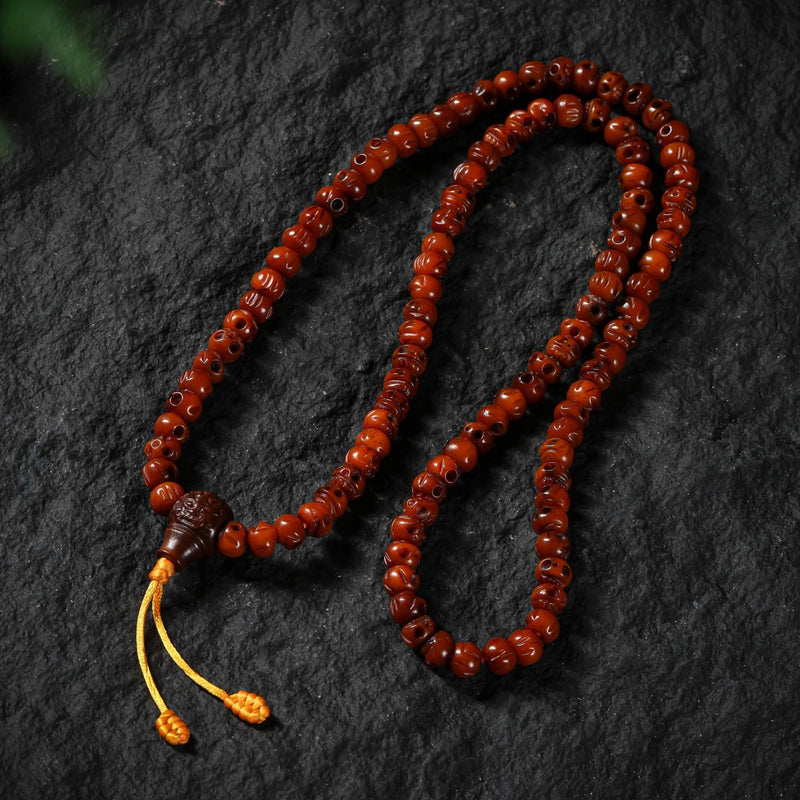
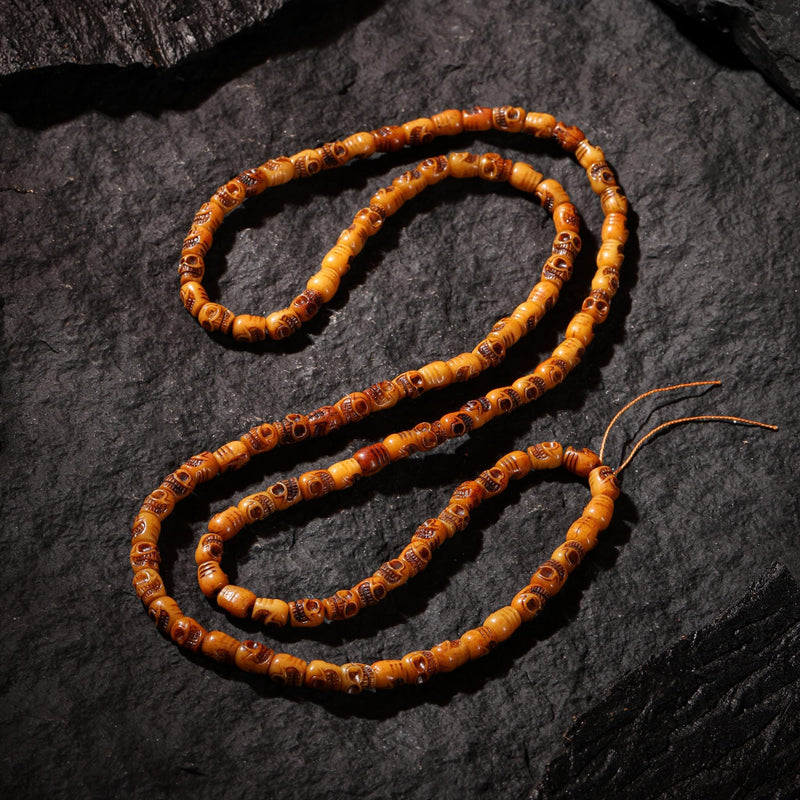
The skull carries this wisdom in portable form. You do not need to go to a charnel ground. You do not need to sit with bodies. You only need to glance down at the piece on your wrist or chest, and remember: all of this is passing. Make it count.
The Mark of Impermanence: What the Tibetan Skull Actually Represents
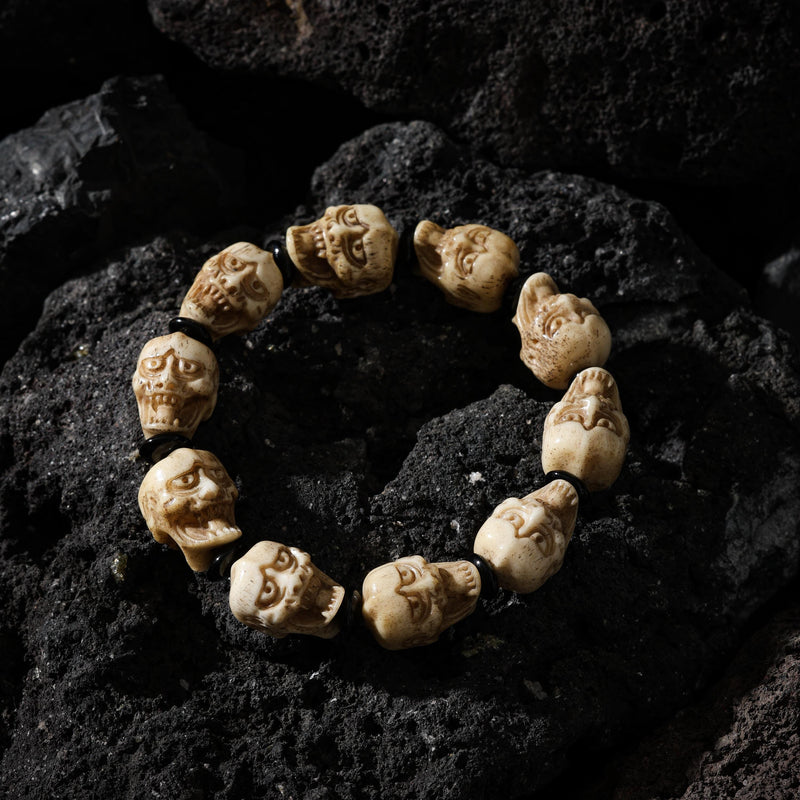
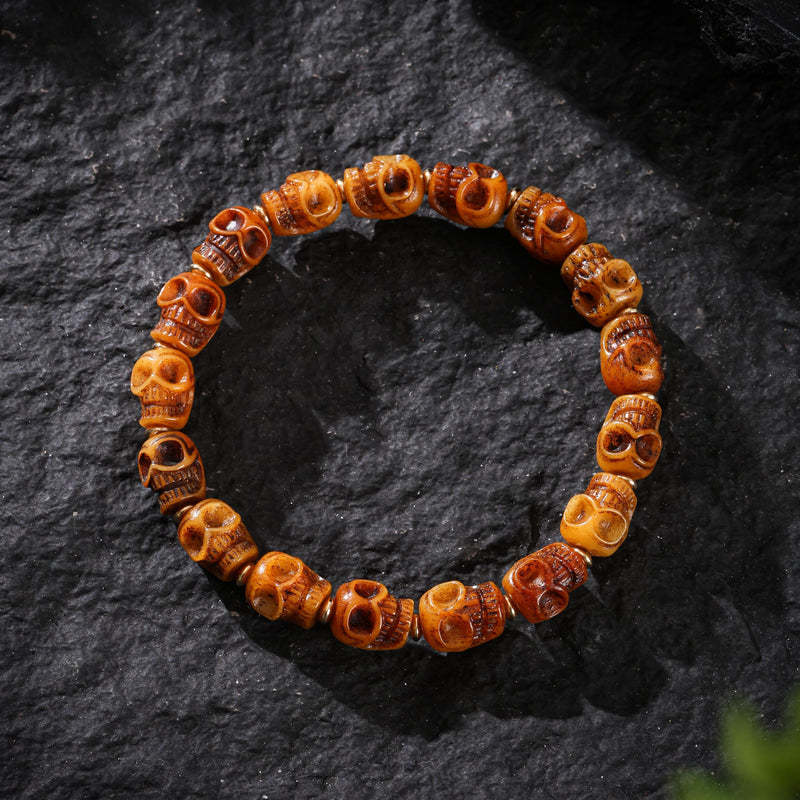
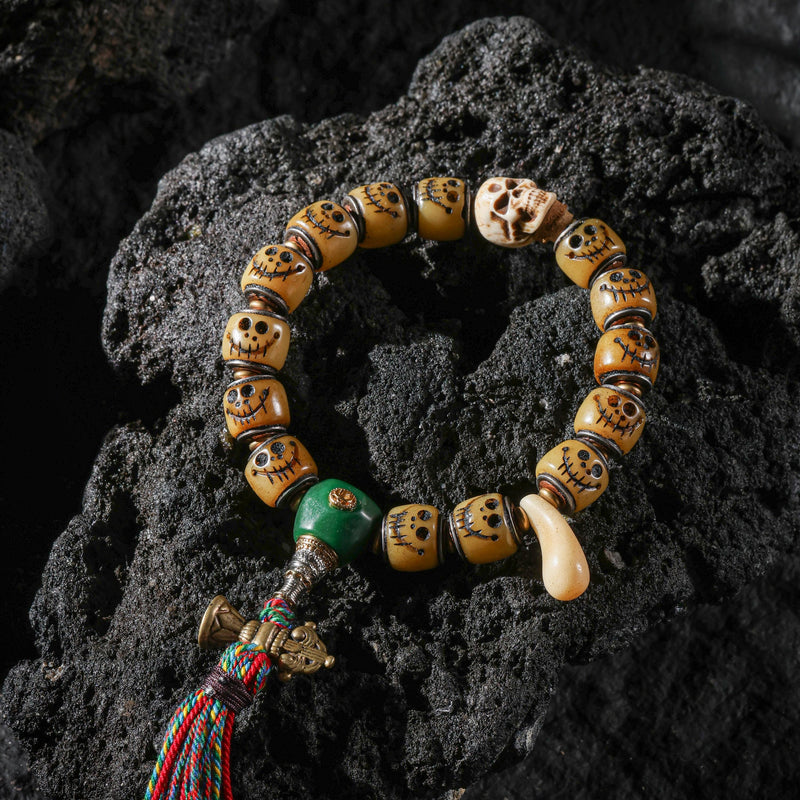
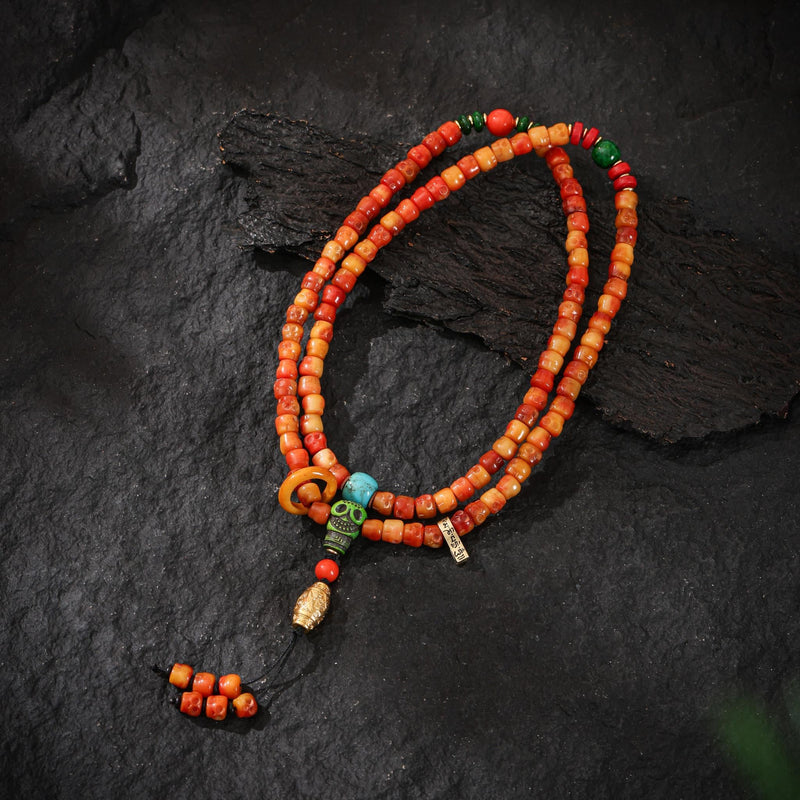
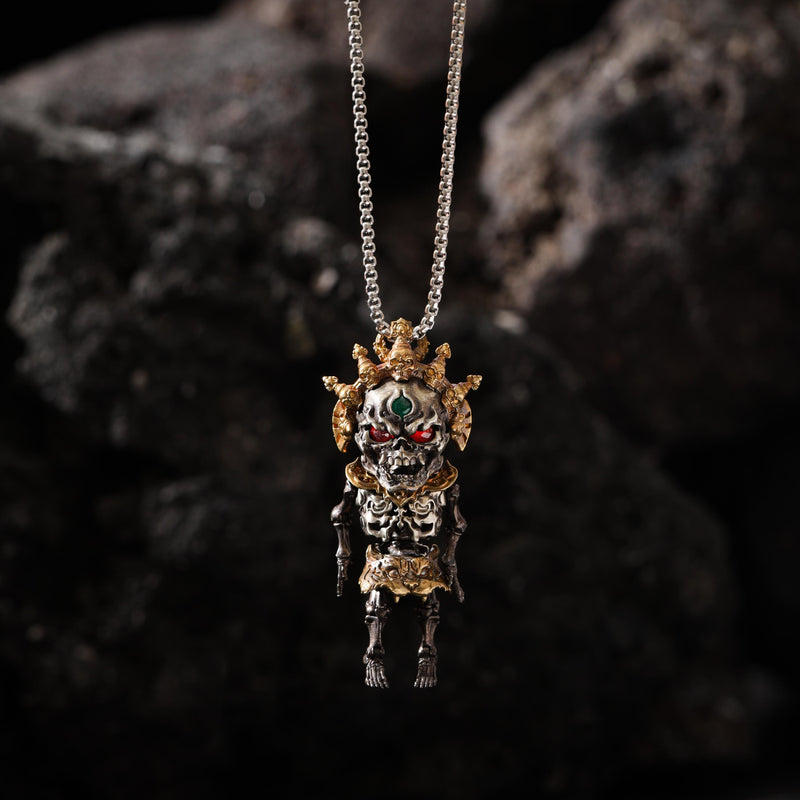
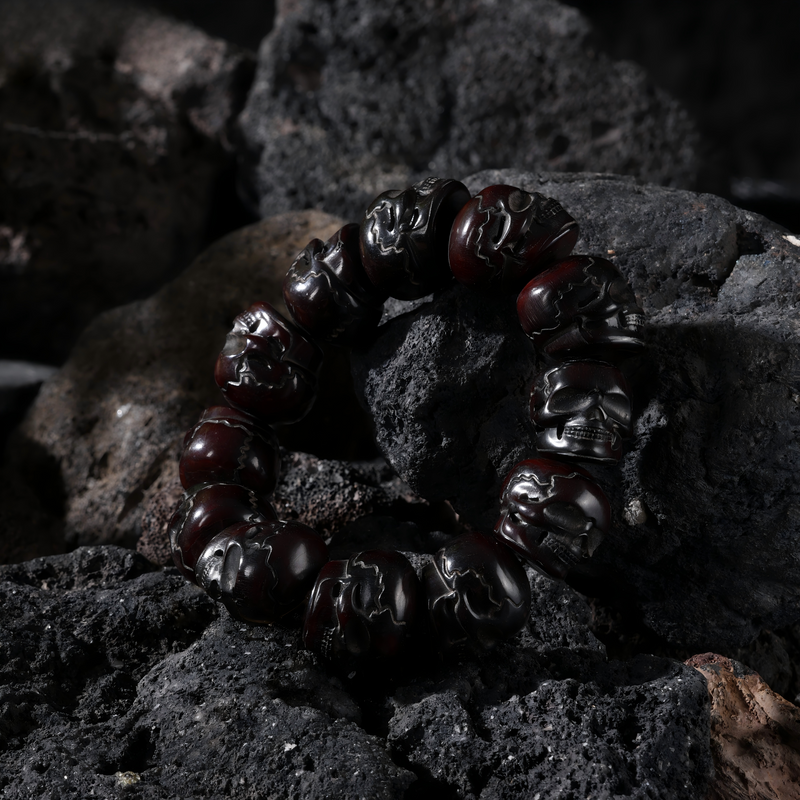
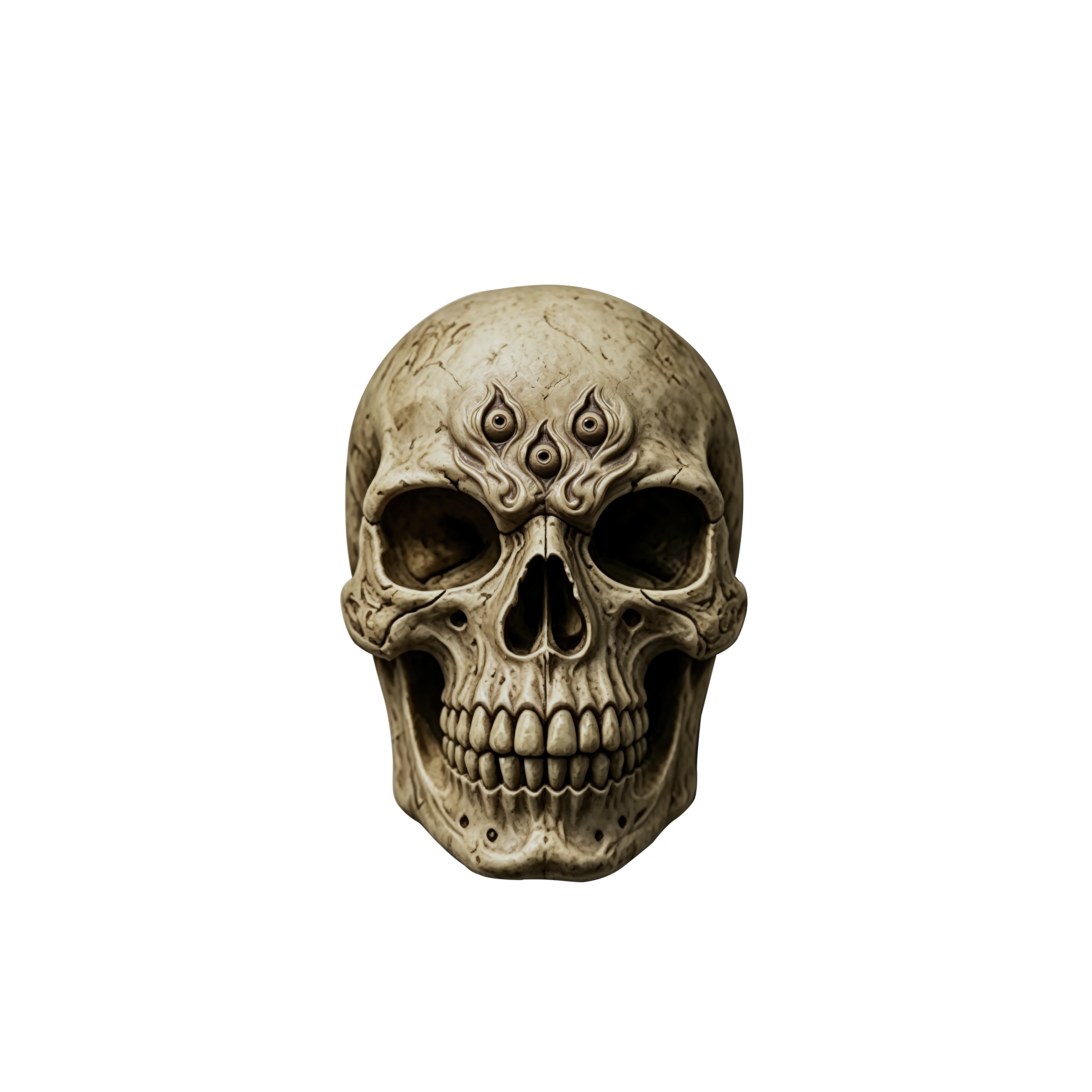
Our skull pieces do not use a third eye motif. Instead, their power comes from a more direct, unadorned truth: the empty eye sockets, the nasal cavity, and the quiet symmetry of the human form remind us that beneath every role, every identity, every achievement and every fear, we share the same fragile, temporary nature.
This is not darkness. It is clarity.
The hollow eyes do not represent something sinister. They represent the ability to see beyond performance, beyond appearance, beyond the stories we tell ourselves about who we should be. When everything else falls away, what remains is simple: we are here, for a short time, and we get to choose what we carry.
That is why the Tibetan skull is so different from decorative gothic imagery. It does not exaggerate fear. It does not amplify aggression. It strips everything back to essentials: life is brief, attachment causes suffering, and freedom comes from living with that truth, not in spite of it.
For modern people, this is especially meaningful. We spend so much of our lives building identities, curating appearances, and clinging to versions of ourselves that no longer fit. The skull reminds us that we do not have to be fixed. We can change. We can let go. We can continue.

Wearing Remembrance: Carry What Matters, Let the Rest Go
Some people worry that wearing a skull symbol invites darkness, or that it is only for people with formal spiritual practice. Neither is true.
This symbol does not bring death. It brings perspective. It does not require you to follow any tradition, recite any mantra, or hold any particular belief. It only asks you to remember two things: that nothing stays, and that you get to choose what you carry with you.
For some people, that means carrying the memory of someone they have lost — not as a weight that holds them back, but as a gentle presence that makes every day more meaningful. For others, it means carrying the lesson of a hard season: a reminder of how far they have come, and how much stronger they are than they thought. For many, it is simply a reminder to stop rushing, to stop clinging, and to be here now.
This is what remembrance truly means. It is not being stuck in the past. It is honoring what shaped you, while keeping your feet moving forward. It is knowing that loss and love are two sides of the same coin, and that to feel one deeply is to have known the other fully.

Final Thought
The skull is not a dark symbol. It is an honest one.
In a world that sells us endless promises of permanence — perfect skin, perfect jobs, perfect lives that never fall apart — it tells us the truth we already know but rarely let ourselves feel: everything changes. And that is not a reason to be afraid. It is a reason to be present.
You do not have to welcome suffering. You do not have to pretend loss does not hurt. But you do not have to run from it, either. You can wear the reminder of impermanence like quiet armor: not to keep life from changing, but to give you the courage to keep living, fully and openly, even when it does.